

Business
South Korea’s Starbucks Shut Early After ‘Tank Day’ Promotion Debacle


Starbucks has more than 2,000 stores across South Korea, including one that overlooks a North Korean village, one in a century-old traditional street market and one that sits on the 99th floor of a glass skyscraper. In a first, they all closed early on Monday.
But the 3 p.m. closure that did not mean extra time off for its 24,000 or so baristas, supervisors and corporate employees. Instead, they all had to do training on historical awareness and cultural sensitivity. It was damage control for a marketing debacle.
Last month, Starbucks unveiled a new line of tumblers that it called “Tank Day.” The campaign began on the anniversary of a massacre in 1980, when South Korea was a military dictatorship and used tanks to crack down on pro-democracy protesters in the southern city of Gwangju.
The backlash to the Starbucks promotion was immediate. South Korea had a brush with martial law less than 18 months ago and the criticism was fierce. Shinsegae Group, the conglomerate that owns Starbucks Korea, took down the ad, issued an apology and fired the Starbucks Korea chief executive. Later, it said that employees had used artificial intelligence to come up with the wording for the promotion and were not aware of the context. The training on Monday was supposed to be the fix.
“Starbucks is trying to demonstrate its commitment to change and their sincerity to consumers and the public by taking the measures of closing stores to train all employees,” said Jongwoo Lee, a professor of marketing at Namseoul University. “Ultimately, the core focus here is restoring a damaged brand image.”
Starting last week, Starbucks had put up signs about the shorter schedule. At about 2:40 p.m. on Monday, baristas at a store at Seoul Station, a busy transportation hub, started telling customers about the early closing. Ten minutes later, workers began closing the window shutters and only accepted takeout orders. At 2:58 p.m., they announced they were closed.
Thank you for your patience while we verify access. If you are in Reader mode please exit and log into your Times account, or subscribe for all of The Times.
Thank you for your patience while we verify access.
Already a subscriber? Log in.
Want all of The Times? Subscribe.
Business
Arizona’s first Buc-ee’s officially opens its doors in Goodyear


GOODYEAR, AZ (AZFamily) — Fans chanted Monday morning as they waited to walk through the doors of Arizona’s first Buc-ee’s.
A long line formed outside the new Texas-sized travel center near Interstate 10 and Bullard Avenue in Goodyear ahead of its grand opening.
The parking lot opened to the public at midnight, with doors set to open at 6 a.m. A ribbon-cutting ceremony is scheduled for 8 a.m.
Some fans arrived days early for the opening. The first customer showed up around 4 p.m. Saturday, waiting along the street with a chair and umbrella. Another fan arrived with a fresh tattoo of the chain’s beloved beaver mascot.
The parking lot quickly filled with cars as customers searched for spots and prepared to spend money on Buc-ee’s food, snacks and merchandise.
Minutes before the opening, fans began chanting “Buc-ee’s” through the doors as employees inside prepared brisket, barbecue and Beaver Nuggets.
If you can’t attend or don’t want to fight through traffic, the ribbon-cutting is set to be live-streamed on the City of Goodyear’s social media channels.
What if I need to access another business along the travel route?
Businesses, residents and travelers should expect to see a major traffic increase for an extended time. Authorities say all business access will stay open along the 6.5-mile travel route and elsewhere on Bullard Avenue.
Travelers in the area should allow for extra drive time and expect slowdowns and delays.
Local travelers not going to Buc-ee’s are advised to consider alternate routes that avoid the congestion. City officials will monitor traffic conditions in real-time for any needed adjustments.
Along with the Buc-ee’s travel route, the eastbound I-10 ramp at Estrella Parkway is closed, along with Bullard between McDowell Road and I-10.
What’s the big deal about Buc-ee’s?
Buc-ee’s is widely regarded for its lovable beaver mascot and hot food. The chain also currently boasts the record for the largest gas station in the world at its Sevierville, Tennessee, location. Not only that, but Buc-ee’s has won “Best Restroom in America,” and if you want to operate a car wash, you can make enough to make a six-figure salary.
What else might you find at Buc-ee’s? There are walls of nuts, gummy candies and your favorite gas station snacks, but there are also many things you won’t see anywhere else.
Take, for example, Beaver Nuggets, a best-seller that’s probably best described as a sweet version of “Corn Nuts” you’ll find at the grocery store. And the food? Oh man, the food! It’s authentic Texas-style barbeque the whole way: smoked for at least 12 hours and served on a mouth-watering bun.
Feeling adventurous? Get some Buc-ee’s-branded hot sauce to take home. If you’re also looking for something to cater to that sweet tooth, you’ve got fudge, Dr. Pepper Icees and every southern grandmother’s favorite classic: banana pudding.
See a spelling or grammatical error in our story? Please click here to report it.
Business
Used Tesla Model X Is The Only Electric Three-Row Family Hauler You Can Buy Under $20,000, But Here’s A Reality Check


When the Tesla Model X was new, the popular 90D version cost about $100,000. Thanks to the magic of depreciation, though, the cheapest Model Xs can now be found in the $15,000 range. As far as practical family cars that still run and drive go, a price like that is hard to beat. And if you want an electric three-row family hauler, it’s your only choice south of $20,000. That makes it a tempting buy for people with a limited car budget who have gotten sick of playing gas price roulette. It’s also an incredibly risky purchase and not a gamble most families should take.
Admittedly, I’m no lover of Elon Musk nor fan of many of his actions, so there’s no getting around the fact that I’m biased here. Still, my issue with most families buying super cheap Model Xs has nothing to do with that. My issues with buying a scarily cheap Model X are much more cheap-Model-X specific.
The first potential problem, of course, is that we’re talking about a decade-old vehicle that was originally designed to cost $100,000. On a limited budget, heavily depreciated luxury cars are almost always a bad idea, but since the Model X is electric, there’s no engine, traditional transmission, starter, or alternator that could break on you. So that’s nice. Still, wear items will need to be replaced, and replacement parts can be pricier than you’re used to. Even tires can get expensive fast.
When Tesla revealed the first Model X prototype back in 2012, its target market was still early adopters, not mainstream buyers. Early customers wanted to be on the cutting edge, and they were willing to put up with, shall we say, “quirks” and “annoyances” that early Model S buyers were used to but Honda and Toyota buyers would never have tolerated. With age, those issues can get worse.
Which brings me to the Model X’s party trick — those eye-catching rear doors. First of all, they’re power-operated, and — no matter how fast power doors open or close — if you’re used to only needing three seconds to pop open a car door, grab whatever you need, and then close the door again, waiting on power-operated doors can be annoying. The same issue applies to minivans with power-sliding rear doors, so it isn’t a Tesla-specific problem; but, if you’re considering a cheap Model X, it’s still worth noting.
I’m also not sure if you remember, but Tesla kept delaying the production Model X, and while the so-called “falcon wing” doors may not have been the only problem causing the delay, getting the doors to work correctly clearly caused at least some issues. In 2016, Tesla ended up suing the supplier, eventually settling the lawsuit. The weird doors on the production version allegedly worked well enough to sell, but when our friends at Consumer Reports bought a Model X to test, it ran into frequent problems with the doors and highlighted a few other notable flaws:
But beyond the brag-worthy magic, the all-wheel-drive Model X 90D largely disappoints. The rear doors are prone to pausing and stopping. The second-row seats can’t be folded, limiting cargo-carrying ability. The big windshield is neat but not tinted enough to offset the brightness of a sunny day, and wind noise is excessive.
If the doors were having problems when the Model X was new and still clobbering four-year-olds in 2023, do you really want to deal with decade-old, out-of-warranty “falcon wing” doors and all the potential risks that come with them? In a car Tesla already canceled? Especially with owners still posting online about Tesla’s service centers failing to fix broken doors? It’s one thing if we’re talking about a sports car, but most parents need their three-row family haulers to work, and you’re playing a dangerous game if you decide that technically-not-a-minivan you buy should be a scarily cheap Model X. Even if that means you have to wait to go electric until you can afford a different family hauler, longterm, that’s probably the smarter move.
Business
Can’t Find Cottage Cheese at the Store? Here’s Why


If you’re finding bare dairy shelves where the cottage cheese should be, you’re not alone—and it’s not your grocery store’s fault, reports the New York Times. As Niko Gallogly writes, the once-stodgy diet staple has been reborn as a “protein-maxxing” star on TikTok, where creators churn it into ice cream, smoothies, and other high-protein snacks. That social-media glow-up has helped drive US cottage cheese sales to more than $2 billion in 2025, up 82% since late 2022, even as manufacturers admit they were caught flat-footed.
Dairy co-ops are now racing to catch up: New York-based Upstate Niagara is pouring $275 million into expanding high-protein production, while Wisconsin’s Westby Cooperative has already sold out of its future, higher output for three years. Breakout brand Good Culture says it can meet less than half of demand despite rapid expansion and a $500 million acquisition by private equity firm L Catterton—fueling consumer suspicion that big money is behind shortages or recipe changes, a claim the new owners deny. See the full piece at the Times for more on how TikTok, protein obsession, and private equity collided in the dairy aisle. (Or read about another shortage fueled by the protein craze.)
Read These Next
Sunken station on the WII ‘death railway’
Check out the best-, worst-run
Ground beef prices move past a
Summer jobs are hard to come by for latest
Business
How UHNW families can choose a financial advisor


PhotoAlto | Sigrid Olsson | Getty
Financial advisors increasingly want to add the super-rich to their client lists. Not only do ultra-high net worth households offer a level of cachet to financial advisors, but there’s also growing demand for advice from this client segment, according to experts.
There were about 442,000 households with $20 million or more in financial assets as of 2024, according to the latest data from Cerulli Associates, a consulting and market research firm. They represent about 0.3% of the U.S. population.
Those households collectively held $22.5 trillion of investable assets, accounting for nearly 25% of such wealth across all U.S. households — up substantially from a 10% share in 2010, according to Cerulli.
“High net worth is the holy grail in many ways” for financial advisors, said Vlad Golyk, a partner at McKinsey & Co., who leads the consulting firm’s wealth management practice in North America.
“The money is sticky, and there’s prestige as well,” he said.
However, not all financial advisors are well suited to work with ultra-high net worth households, experts said.
These clients — generally, those with investible assets totaling roughly $20 million to $30 million or more — have specific financial needs that require expertise beyond that typically suited to the average investor, experts said.
“It’s a different job,” Golyk said.
The No. 1 question: Am I an ‘outlier’?
There’s one big question that extremely wealthy households should ask prospective financial advisors to gauge whether they should hire them, experts said.
“The first question has to be: ‘This is what my financial picture looks like. What services do you have, and what experience do you have working with clients like me?'” said Chayce Horton, an associate director in the wealth management practice at Cerulli Associates, a consulting and market research firm.
The operative words here are “like me,” because households and their needs can vary a lot in the ultra-high net worth market, Horton said.
For example, you might be a family with a significant manufacturing business, or a 35-year-old engineer with $35 million in stock options in a company that’s about to go public — both of which are “complex, individualized situations,” he said.
Similarly, Golyk said uber-rich clients don’t want to be an “outlier” among a financial advisory firm’s other clients.
In other words, they should strive not to be the firm’s biggest or smallest client, Golyk said.
Services that advisors to the ultra-wealthy offer
Ultimately, the bulk of services an advisor will offer to ultra-wealthy clients exist outside of a traditional portfolio management context, Horton said.
Generally, the extremely rich need advisors who can oversee complex financial issues and intergenerational wealth. Services typically entail tax, estate and trust planning; and business advisory and philanthropic services, experts said.
The family governance piece is a biggie, experts said.
It’s important to find an advisory firm that can serve multiple generations simultaneously, Horton said.
That expertise goes beyond the technical, financial and administrative aspects of estate and tax planning, management of trusts, and overseeing wealth across generations — and also includes serving as “mediator or family therapist,” Horton said.
For example, parents may have $50 million that their children may or may not know about, and that younger generation may or may not be inheriting the money, he said. That family might need to know the options for establishing a family trust, how to structure things most tax-efficiently and, once decided, how to communicate that with the children, he said. Or, in another scenario, how would a wealthy entrepreneur with a family business pass on leadership responsibilities across generations?
These are emotional situations for advisors to handle, Horton said.
Firms don’t necessarily need to offer all these services in-house — they can outsource certain functions — but the end result must be “seamless” for the client, Golyk said.
Two more important questions to ask a prospective advisor are:
How do you implement tax and estate planning? Wealth transfer is where a lot of value-add is for ultra-high net worth advisors, and this question gives insight into whether advisors understand how to approach this complicated issue, Golyk said.
What is your succession plan? Prospective clients are probably meeting with a senior advisor who leads a team. However, families are likely hiring an institution for the next 30 years or more — so this specific advisor may no longer be there years down the road, Golyk said.
The reaction to certain questions offers as much insight as the answer, he said. The best advisors answer all these questions, while those who get defensive probably aren’t best for you, he said.
“I’d want to know overall that this is a highly professional team who serves clients like me, helping with complex structuring and transferring of assets, and they think ahead about my kids, grandkids and generational entities — and they take care of all of it,” Golyk said. “That’s what I want to walk away with.”
Business
OpenAI, SpaceX, Anthropic IPOs expected to trigger tech wealth migration to South Florida

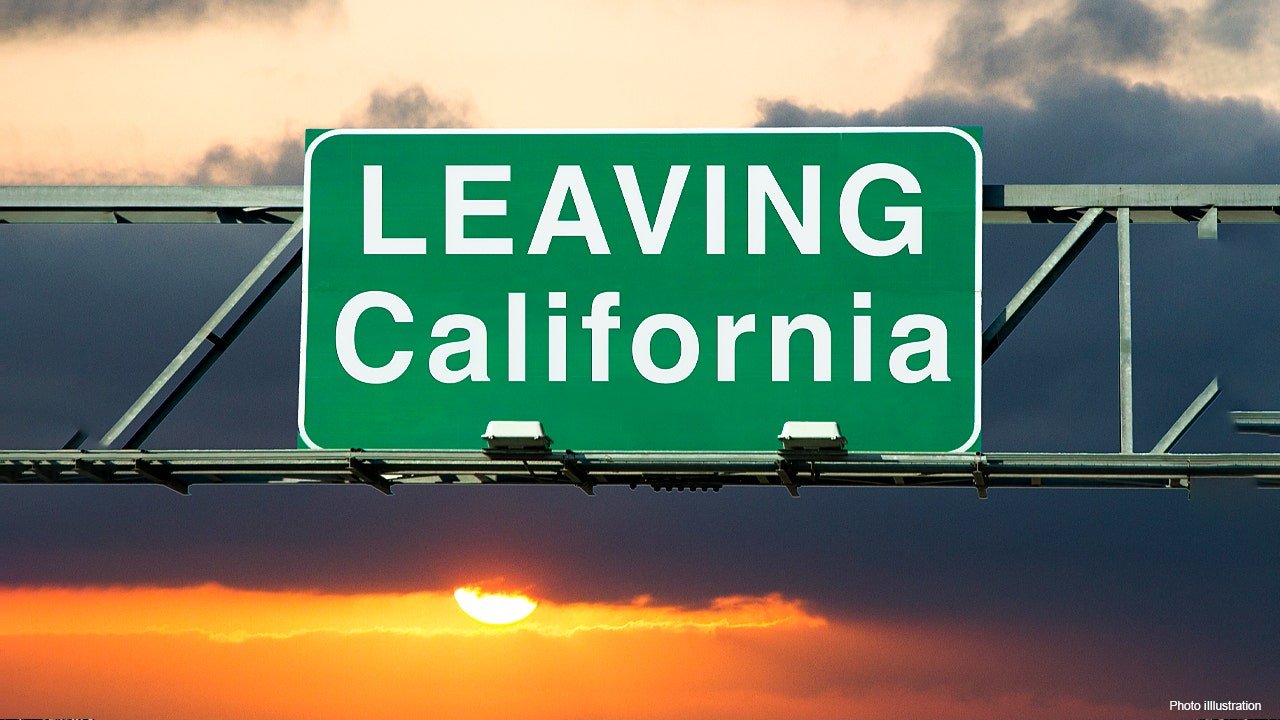
A fresh wave of Silicon Valley wealth could soon flow into South Florida.
With OpenAI quietly filing for a confidential IPO alongside market debuts from aerospace giant SpaceX and AI rival Anthropic, billions of dollars in overnight liquidity are about to be unlocked for executives and middle management alike. But instead of reinvesting in the Golden State, this incoming class of newly minted tech multimillionaires is already flooding Florida real estate brokers with calls — triggering what experts say could be a rapid-fire “Tech Exodus 2.0” measured in months, not years.
“The California area codes have already started showing up,” Fort Lauderdale Downtown Development Authority CEO and President Jenni Morejon told Fox News Digital. “It’s just that the conversations are evolving.”
“We get that Malcolm Gladwell ‘tipping effect,’ where you almost have to be in Miami because a lot of your friends and family and neighbors are moving here,” DaGrosa Capital Partners founder and chair Joe DaGrosa also said. “We saw that happen in New York. I think we’re going to see the same thing happen out of California.”
FLEEING FOR THEIR FUTURES, A CALIFORNIA EXODUS UNLEASHES A FLORIDA ‘GOLD RUSH’
Despite its strong talent pool, “Silicon Valley is absolutely a boring place to live compared to Miami,” real estate magnate and Naftali Group CEO Miki Naftali added. “How can you even compare between living in Miami and Silicon Valley?”
This week, SpaceX stock continued to surge following its record-setting IPO last Friday on the Nasdaq, rising more than 35% since it started trading. That briefly made it the fourth-largest global company by market cap before some of those gains were pared back.
SpaceX’s valuation success bleeds into the highly anticipated IPOs of OpenAI and Anthropic, which Reuters reports are both expected to list in late 2026.
Once an IPO hits the public stock market, those paper shares or stock options that employees might own instantly transform into liquid, tradable cash.
“There is going to be this transitional event with the IPO where executives are finally gonna see probably the biggest cash day most of them have ever seen in their lives. And many of them are not making millions, they’re making tens of millions overnight. And I think that’s going to have them thinking long and hard about South Florida and Miami in particular,” DaGrosa, whose firm has spent much of the last two decades investing in real estate, said.
“What we’re seeing here is a shock in a positive way to the financial balance sheets of individuals, particularly out in California, where I think they’re gonna be moving in a matter of months, not years or decades,” he continued.
Nestled between West Palm Beach and Miami, Fort Lauderdale is poised to welcome the tech titans, according to Morejon. The “low-key” culture of Fort Lauderdale and its private neighborhoods could prove to be a refreshing change from the spotlight of California.
CALIFORNIA LOSES FORTUNE 500 CROWN TO TEXAS AS BILLIONAIRE TAX THREAT LOOMS
“Having newcomers here with wealth is really a calibration. Fort Lauderdale has always attracted wealth that’s active, it’s global, it is highly productive. It’s just not performative,” Morejon said. “The wealth doesn’t hide here. It just doesn’t feel the need to announce itself. And I really think what we’re seeing now with AI founders, with the era of liquidity with SpaceX is a generation that’s used to speed and being very public… But many are also reaching a stage where I think they value discretion, it’s becoming an asset.”
“Tech jobs have actually grown 20% since 2021, and the increase in wealth, in terms of our downtown population, has also grown at the same rate. Our downtown economy supports over $43 billion annually in economic impact, and that’s a disproportionate and overarching share in high-value industries like tech, finance, professional services,” she added “So I think you see that this isn’t just a lifestyle narrative, it’s actually an operating environment for new businesses. And we have the engineering and infrastructure emerging to prove that.”
Naftali admits he feels “it’s too early to tell” when or where exactly new millionaires and billionaires will make the coast-to-coast move, and says the migration won’t solely be coming from California.
“Who is leading those IPOs? Those that are leading the IPOs are really based in New York because those are the Wall Street guys that are running the IPOs for the high-tech companies, and they are making huge bonuses,” Naftali said.
“There is going to be this transitional event with the IPO where executives are finally gonna see probably the biggest cash day most of them have ever seen in their lives.”
“We speak about Silicon Valley, but SpaceX is not in Silicon Valley,” the developer also noted. “But the point is, it’s all about talent, right? They’re all going after the talent… So [that’s] what Florida is still lacking and it’s gonna take time to attract the talent.”
Yet as the talent begins to follow the capital, the ultimate ripple effects will likely extend far beyond luxury beachfront high-rises. The experts argue that a massive wave of public market wealth creates an entirely new class of consumer — and resident — that shifts the cultural fabric of local communities.
“What’s interesting, though, is middle management at SpaceX and all these other companies, middle managers have wealth creation that can be $25, $50, $100 million. So what we would historically think of as a middle manager earning a decent living building wealth slowly over time, it’s a game-changer,” DaGrosa pointed out, noting that as these teams migrate, the housing market periphery will see a massive boom.
GET FOX BUSINESS ON THE GO BY CLICKING HERE
“I think what we see is actually more opportunity for Floridians to get better jobs. I mean, when a state is doing well and making money… more people are moving into the state and spending money,” Naftali said.
“If you’re building a company at scale, you need three things: You need access, you need talent and you need a quality of life that sustains performance,” Morejon stated of her ultimate elevator pitch to incoming West Coast founders. “And if you need a place to dock the yacht, we can handle that, too.”


What happens now UK PM Keir Starmer has resigned? #KeirStarmer #BBCNews
Subscribe to our channel here: https://bbc.in/bbcnews For the latest news download the BBC News app or visit BBC.com/news …


A look back at Keir Starmer's political career. #KeirStarmer #UKPolitics #BBCNews


‘Summer House’ alum Danielle Olivera gives birth 10 weeks early, baby placed in NICU
Danielle Olivera announced that she gave birth to her baby boy, Aidan, 10 weeks early. On Father’s Day Sunday, the...


First round of U.S.-Iran negotiations ends and U.K. PM resigns: Morning Rundown
The U.S. and Iran establish a road map for reaching a final deal during negotiations in Switzerland. Keir Starmer says...


UK PM Keir Starmer resigns. Who will succeed him?
Keir Starmer announced Monday he is stepping down as Britain's prime minister, yielding to intense pressure from his own …


Tobey Maguire’s ex-wife Jennifer Meyer welcomes third baby at 49, her first with fiancé Geoffrey Ogunlesi
Jennifer Meyer is a three-time mom! The jewelry designer, 49, confirmed she gave birth to her third child — her...


‘Hazbin Hotel’ Creator Unveils ‘Prehistoria,’ Warner Bros. New Feature
As Annecy Animation Festival attendees try to avoid the scorching sun as much as they can, Warner Bros. Pictures Animation...
Kelly Ripa’s daughter Lola ‘could cry’ as she shares beautiful life update with her ‘best person ever’
Lola Consuelos is on cloud nine with her boyfriend Cassius Kidston, and recently declared she “could cry” with joy. Kelly...


Concertgoer who fell to his death during Madison Square Garden show identified
NEW YORK — A 51-year-old Connecticut man fell to his death from an upper deck of Madison Square Garden during...


Arizona’s first Buc-ee’s officially opens its doors in Goodyear
GOODYEAR, AZ (AZFamily) — Fans chanted Monday morning as they waited to walk through the doors of Arizona’s first Buc-ee’s....
-

 Business1 week ago
How much of Musk’s wealth comes from government help? Virtually all of it
-

 Politics2 weeks ago
What to know about the stabbing that set off fiery riots in Northern Ireland
-

 Video1 week ago
Download fans say what they love about the festival. #DownloadFestival #BBCNews
-

 Video1 week ago
Why SpaceX IPO isn't about space. #SpaceX #ElonMusk #BBCNews
-

 HealthNews1 week ago
The people of Okinawa, Japan only eat until they are about 80 percent full, then stop — and the practice has been linked in multiple peer-reviewed studies to lower rates of cardiovascular disease, slo
-

 Food1 week ago
Pope Leo’s plane was grounded. Then the King of Spain stepped in to help
-

 TravelNews1 week ago
My Paternal Instinct Should’ve Warned Me About Netflix’s Maternal Instinct
-

 Video1 week ago
Claire Danes has the cutest stories about young Kirsten Dunst on 'Little Women' set