

Food
What to know about the New World screwworm

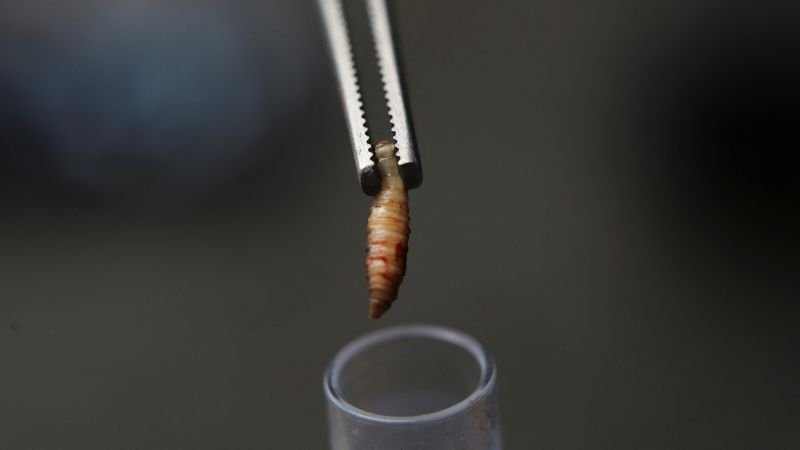
Earlier this month, Texas Gov. Greg Abbott told residents to brace themselves for an “extraordinarily challenging summer.” A flesh-eating parasite that did hundreds of millions of dollars of damage across the state in the 1960s and ’70s, one that had been considered eradicated from the US for decades, has come back and poses a serious threat to cattle, wildlife and pets.
The first case of New World screwworm in this latest outbreak was confirmed June 3 in a 3-week-old calf in South Texas that has since recovered. But despite enhanced surveillance and restrictions on movement, cases continue to turn up hundreds of miles beyond the southern border.
If the parasite’s advance can’t be halted by the state and federal governments’ stepped-up surveillance, containment and treatment efforts, experts say, the outbreak could cost the southwestern United States alone billions of dollars.
The larvae of the parasitic fly feed on the tissue of any warm-blooded animal, even humans, but officials say the risk to people is low. While it’s not a direct food safety issue, the infestation could raise the cost of beef at a time when Americans are already paying record high prices.
Screwworm by the numbers
The latest outbreak started in Central America in 2023 and has been extensive, according to the US Centers for Disease Control and Prevention. There have been more than 185,000 animal cases and 2,100-plus human cases reported in Mexico and Central America.
In the US, there have been 15 cases identified as of Sunday, according to the US Department of Agriculture. Cattle have been affected most so far. Other animals that have been infested include sheep, goats and a dog. Texas, the largest beef producer in the country that produces the most beef in the world, has had the majority of cases. The dog lives in New Mexico.
No human cases have been reported as part of this outbreak. The last case in the US was a travel-related one in Maryland in 2025.
The CDC has designated the outbreak a Level 3 public health emergency, its lowest level, which means the CDC is actively monitoring the situation and using its experts to manage the event. The agency has also been urging doctors to be on the lookout and report any cases.
What is a New World screwworm?
The name of the pest may confuse people, said livestock entomology and parasitology expert Dr. Jonathan Cammack. It’s a fly, not a worm. It’s not even a contagious disease that spreads from animal to animal; it’s an infestation.
It’s called a screwworm because, unlike many fly larvae that feed on dead or decaying flesh, New World screwworm larvae screw into the flesh of warm-blooded animals to feed.
Emory Cushing, an entomologist with the USDA’s Bureau of Entomology, and Walter Patton, a scientist at the University of Liverpool in England, first identified New World screwworm as a distinct species of fly in 1933.
Scientists used to call it only a screwworm. But in the 1980s, when the species turned up in North Africa, a region that had its own distinct screwworm, scientists needed a way to distinguish between the two, said Cammack, an assistant professor and the state extension specialist at Oklahoma State University in Stillwater.
Scientists named the fly commonly found in Central, South and now North America the New World screwworm and labeled the kind found more typically in Africa and Southeast Asia the Old World screwworm.
How screwworms hurt animals
The New World screwworm makes warm-blooded animals sick when the adult female deposits eggs into an open wound or a mucous membrane, like in the eye or nose.
The eggs hatch within about 12 to 24 hours. Larvae emerge and immediately start to feed, tearing into the host animal’s tissue, causing sores to expand and deepen and sometimes creating secondary bacterial superinfections, according to the CDC.
The smell that comes from the deterioration in the animal’s flesh can also attract additional screwworm to lay more eggs, and it may attract other species of fly that can co-infest the lesions.
Larvae can rupture arteries, causing severe bleeding and leaving the animals severely anemic.
If left untreated, screwworm infestations can eventually kill the animal host within seven to 14 days.
How screwworm infections are treated
If it’s caught early, animals can be cured of a New World screwworm infestation.
Veterinarians typically clean out visible eggs and larvae and then use an insecticide that kills larvae and protects against reinfestation.
In August, the US Department of Health and Human Services issued a declaration allowing the US Food and Drug Administration to provide emergency use authorizations for animal drugs to treat and prevent infestations of screwworm. There are a handful of medicines to treat and prevent infestations in pets and in livestock, zoo and wild animals.
Animals that fully recover from an infection can eventually enter the food supply after a rigorous USDA safety inspection.
Preventing infestation
Just because one calf is sick doesn’t mean the entire herd will get it, Cammack said.
“It takes a lot of very specific steps to happen, so it’s not like this is just going to pervasively spread through any of our herds of animals,” Cammack said.
To control infestations, the government has encouraged producers to keep a close eye on their animals and watch for wounds that could make the animal a target.
But that may not be as easy as it sounds. Wounds as small as tick bites can attract the flies. Although it may be easy for a person with one pet cow in the backyard to keep a close eye on their animal, bigger operations like those in Texas face a tougher task. “We’ve got producers on the other end of the spectrum that could be interacting with their animals two or three times a year,” Cammack said.
How the US stopped screwworm in the past
Before it was eradicated in the 1960s, screwworm caused huge livestock and wildlife losses, mostly in the warmer states, with infestations concentrated in Texas, Mississippi, Alabama, South Carolina, North Carolina, Georgia and Florida. Cattle producers in affected states lost up to $50 million to $100 million per year before full eradication, according to a 2025 analysis from the USDA.
In the 1950s, scientist Edward Knipling discovered that he could sterilize flies with radiation. Female New World screwworms mate only once, and Knipling theorized that if he created enough sterile flies for the females to mate with, the fly population would die off.
In 1958, the US created its first fly-rearing facility in Florida and dropped sterile flies in affected areas. By the next year, outbreaks in Florida, Alabama and Louisiana were controlled. Building new sterile fly production facilities in the Southwest helped eradicate the flies in that region too, and by 1966, the US was declared officially screwworm-free.
Some outbreaks still cropped up in the US after that – the largest in 1972, when Texas alone had 90,000 cases – but experts say the effort was beyond successful.
“Using the sterile insect technique was one of the USDA’s major achievements of the 20th century,” said Max Scott, an entomology and plant pathologist who is a professor at North Carolina State University. “The USDA, over a 50-year period, succeeded in eradicating this fly all the way down to the Panama-Colombia border.”
Why screwworm came back
The screwworm barrier in Panama eventually failed. The latest outbreak started in 2023, with several cases popping up in Panama and Costa Rica, and then slowly started spreading north toward the United States.
The spread happened for a few reasons, Scott said.
In hindsight, he said, the strain of infertile male flies used recently was “probably not as good,” so the female flies were no longer choosing to mate with the less-fit sterile males.
A recent surge of migrants across the Panama-Colombia border also included animals that may have been infected, he said. The fly doesn’t travel big distances and moves more frequently on infested livestock. Livestock was also smuggled across borders without proper health checks, according to a 2022 report from the think tank InSight Crime.
USDA Secretary Brooke Rollins has blamed the Mexican government for not cracking down on “cartel trafficking and immigration” while some Democrats point the finger at the USDA for not doing enough.
In a letter to the USDA on June 9, several US senators expressed concerns that “significant staffing reductions” due to retirements and resignations, as well as Trump administration funding and staffing cuts, affected the national screwworm response. Rollins has repeatedly denied that staffing cuts had an effect and says President Donald Trump has given her all the resources she’s needed.
Even some Texas Republicans have been critical of the Trump administration’s response. Texas Agriculture Commissioner Sid Miller critized the federal government’s efforts as “slow, bureaucratic, and incomplete.” He wants the federal government to use a targeted chemical baiting method as a bridge before more sterile fly facilities can be built.
Although the screwworm infestation has created “unfortunate circumstances,” Rollins remains “bullish and buoyed and inspired and just invigorated by these incredible producers that we’re up there fighting for every single day, and we’re going to beat this,” she said June 11th. “We beat it before, and we’re going to beat it again.”
What the US is doing now
The US is taking several steps to stop the screwworm.
Sterile fly facilities
The USDA has invested millions to modernize a facility in Mexico that produces sterile flies. Rollins says that facility should open this month and supplement the flies already produced in Panama. The USDA also broke ground on a $750 million fly-producing facility in Texas, but that’s not supposed to open until next year.
As of now, the USDA is bringing 100 million flies from its Panama facility to affected areas in the US every week.
The agency is also seeking approval for the NovoFly, a genetically altered all-male fly that would create stronger flies faster, but the US Environmental Protection Agency has not said when it would decide whether to approve the fly.
Changes at the border
The Biden administration closed southern borders to Mexican cattle in November 2024, after the first screwworm case was confirmed in Mexico, but after pressure from the beef industry, Trump briefly reopened the border to cattle imports in February 2025. The USDA shut southern ports to Mexican cattle again in May 2025. As of June, exports of horses, pigs, ferrets and birds were halted from all US states to Mexico by the USDA.
The USDA has staged sniffer dogs to look for screwworm at the southern border and increased Tick Rider border patrols — horseback riders looking for the pest.
“We now know what the enemy looks like. We now understand what we have to do,” Rollins said last week.
Shifting experts to Texas
The USDA has temporarily relocated its Iowa lab team that works with screwworm to Kerrville, Texas, to bring testing closer to the affected area. The agency also launched a $100 million innovation initiative to incentivize scientists to come up with additional ways to eliminate screwworm. The USDA has announced funding for some of these new approaches, including using drone technology, developing novel traps and lures, and developing genetic strains to produce flies faster.
States take action
Several states have also taken action to stop screwworm. New Mexico stepped up its surveillance, and some states including South Carolina and New York have created interstate movement health restrictions for warm-blooded animals entering from impacted areas. California is working with the University of California, Riverside to conduct prevention trapping and has sought emergency use authorization for additional treatments.
And in Texas, the state with the most cases, Abbott expanded a disaster declaration to authorize the use of all state government resources to respond to screwworm cases, several counties have done the same. The state has set up additional surveillance and created infested zones while implementing quarantines, movement controls and surveillance in affected areas. Texas has also developed a free course to expand the number of New World screwworm inspectors across the state.
The state government is working closely with private landowners to do additional fly trapping in areas frequented by Texas’ abundant wildlife. With about 5.4 million whitetail deer alone, deer hunting adds about $9.6 billion to the state’s economy, said Alan Caine, wildlife division director with the Texas Department of Parks and Wildlife,
Abbott encouraged ranchers and others in the state to pay close attention to their animals and to report any cases quickly.
“Texas is resilient. Our producers, veterinarians and state officials are among the very best in the United States. It is critical to stay vigilant and stay informed. We prevented and eradicated this before; we can do it again.”
Food
L.A. fire update: How long will the Boyle Heights smoke last?


Firefighters battled a stubborn cold-storage warehouse fire in Boyle Heights for a fifth day Sunday as residents’ concerns over air quality continue to mount.
Los Angeles Fire Department Chief Jaime Moore said fire crews made significant progress in combating the blaze. If progress continues at this rate, it should be out by week’s end.
A Fire Department spokesperson said Sunday evening that although crews have removed sections of exterior walls, allowing greater access to the fire, the property’s construction — such as supports of a collapsed roof — continues to create “complex and unstable conditions that require a cautious and methodical approach.”
“Firefighters are operating with a strong emphasis on safety and are closely monitoring potential structural failure hazards,” spokesperson Jamie Stewart said. “Fire conditions along the exterior portions of the structure have been largely knocked down. The next phase of operations will focus on accessing and extinguishing remaining fire within more interior areas of the building. Smoke conditions have improved significantly and are expected to continue improving as firefighters make progress extinguishing the fire.”
However, Stewart cautioned that although the air quality is improving, smoke conditions in the area may intermittently increase as firefighters try to extinguish flames in concealed spaces.
The upbeat tone struck by city officials belied the ongoing concerns from neighbors and people across large swaths of L.A. about the smoke that has poured from the building for days. A particle pollution advisory issued by the South Coast Air Quality Management District remains in effect through 12:30 p.m. Monday.
Regulatory monitors show that air quality levels ranged from “unhealthy for sensitive groups” to “very unhealthy” since Saturday night in the areas of Los Angeles County, the San Gabriel Valley and northwest San Bernardino Valley. There were complaints across social media about poor air quality from residents in those neighborhoods.
East Los Angeles, Boyle Heights and the San Gabriel Valley will continue to feel the effects of the smoke on Monday.
Los Angeles Mayor Karen Bass and Gov. Gavin Newsom jointly declared a state of emergency Saturday because of the unhealthful air quality.
Moore said at a news conference Sunday afternoon that the declaration frees up funds that can bring in more resources in the region. Moore said he is asking for 12 additional fire engines and six additional trucks to help support firefighters.
“We’re going to continue to be working this fire throughout the clock,” Moore said. “I’m hoping by the end of this week, we’ll have this thing completely done and turned over to the building owner and building occupant.”
Late Sunday night, the city announced new road closures and traffic restrictions near the fire on the 1400 block of South Los Palos St.
There are street closures at the intersections of Union Pacific Ave. and Calzona St., Union Pacific Ave. and Indiana St., Noakes St. and Calzona St., as well as Noakes St. and Indiana St.
Other intersections are only accessible by local residents, employees and others who need to be in the area.
Traffic control points have been put in place at Olympic Blvd. and South Los Palos St., Olympic Blvd. and Prado St., Olympic Blvd. and La Puerta St., Olympic Blvd. and Indiana St., as well as Olympic Blvd. and South Alma Ave. No southbound traffic is permitted, though residents who live north of Union Pacific Ave. are allowed access.
No eastbound traffic is allowed at the intersections of Mirasol St. and Union Pacific Ave. nor at Mirasol St. and Noakes St., though traffic heading north and south is permitted. Westbound traffic is prohibited at Hicks Ave. and Union Pacific Ave. Westbound traffic is also prohibited at Hicks Ave. and Noakes St., though commercial vehicles serving local businesses are allowed, as they are eastbound and westbound on Noakes St.
“Members of the public are encouraged to avoid the area and use alternate routes whenever possible,” Stewart said. “Reducing traffic congestion around the incident will help ensure firefighters, emergency vehicles and utility crews can safely and efficiently access the scene.”
The blaze at the 500,000-square-foot commercial building began Wednesday. The corrugated steel walls are filled with dense foam. Moore suggested Sunday that the steel has protected most of the foam from burning, but the fire has emitted gases despite efforts to fight the flames from the ground and with helicopters.
Overnight Saturday and into Sunday, firefighters removed portions of the wall to improve access and to allow firefighters to advance into areas that were otherwise inaccessible. The department also brought in helicopters capable of carrying larger quantities of water to the site.
Moore said the facility has remained at 45 degrees, which mitigates the risk of it becoming a biohazard due to food spoilage. “The bio concerns are not there,” he said. “It is spoiling, but not at the levels that we were afraid of.”
Officials have said firefighters are still dealing with poor visibility inside the facility due to its complicated layout.
Bass said at the news conference that the building’s tenant, Lineage Logistics, has committed $2 million to help residents and businesses affected by the persistent fire.
However, City Councilmember Ysabel Jurado said that “Boyle Heights did not create this crisis, and Boyle Heights should not be left to carry the burden of cleaning it up on their own.” She added that the city should hold the company accountable for a safe cleanup and for mitigating any environmental hazards.
Residents say they are feeling the effects of the fire, which has sent large plumes of smoke into the air.
At Yia Caffe, a coffee shop a few blocks from the warehouse, manager Leo Miguel said the smoke has been affecting both customers and employees. Miguel said many customers are opting to grab their drinks and go rather than linger outside as smoke drifts through the neighborhood.
The smoke smells “like chemicals and plastic,” Miguel said, adding that it leaves his mouth feeling dry and makes it “hard to breathe.” Business has slowed since the fire began Wednesday, he said, and conditions don’t appear to be improving.
“I don’t think it’s getting better,” Miguel said. “If anything, it’s getting worse.”
Hazy conditions were visible at Dodger Stadium, where manager Dave Roberts told reporters the Dodgers’ game against the Baltimore Orioles was expected to start on time as long as air quality did not deteriorate.
Wil Blake, who lives a block from Walt Disney Concert Hall in downtown Los Angeles, said he woke up Sunday morning to the smell of “soot and smoke” in the air, which reminded him of last year’s wildfires.
Blake said he keeps his windows open because his air conditioner has been out of service in recent weeks. He needed to shut them after noticing the smoke. He also wore a mask outdoors and went to a nearby Planet Fitness because he “needed to get some filtered air.”
At the city’s smoke relief center at Pecan Recreation Center, Ashley Campos, 18, said her family left their home on Hicks Ave. near the fire because of health concerns. Campos said her 44-year-old mother has asthma, her 9-year-old brother has epilepsy, and her 68-year-old grandmother is battling cancer.
Campos said the family lives about two blocks from the warehouse and could smell smoke inside their home. They looked into buying an air purifier but found them either too expensive or unavailable for immediate delivery.
“We didn’t want to even risk it,” Campos said of staying home. Her father has remained at the family’s house “just in case anything happens,” she said.
Campos said the family has struggled to obtain a purifier and has heard similar concerns from neighbors. “It’s really hard,” she said. “My dad tried looking for one, but he couldn’t find them.”
Michael Kleinman, a toxicologist and professor at UC Irvine’s Wen School of Population and Public Health, said the danger zone from the smoke is dependent on how fast the wind is blowing and in what direction. He warned that throat irritation, stinging or watering of the eyes, or a runny nose can indicate a more serious reaction.
The potential biohazard posed by millions of pounds of spoiling food is “something that’s really unprecedented,” Kleinman said.
“It’ll certainly be smelly and noxious, and bacteria and things are going to be growing in it,” he said. “Obviously not getting in contact with it is an issue, but if the stuff starts to burn, it adds this biological material to the plumes, and you’re going off into territory that really is very untested.”
Robbie Munroe, meteorologist with the National Weather Service in Oxnard, suggested that one of the reasons the reach of this particular fire seems so broad is that light winds continue shifting directions from morning to afternoon.
“The location of Boyle Heights, in the middle of the L.A. Basin, usually experiences morning winds from the south or southeast, which might impact a larger portion of the downtown area, depending on how widespread the smoke has been,” he said. “It could get up to Glendale or the West Hollywood area.
“As it turns toward the afternoon, you get the sea breeze kick in, that’s southwest to west usually, that would take it further inland or away from the coast.”
A reporter for The Times noted that traces of smoke were evident Sunday morning in Simi Valley.
Food
Boyle Heights Warehouse Fire Spreads Smoke Across Los Angeles

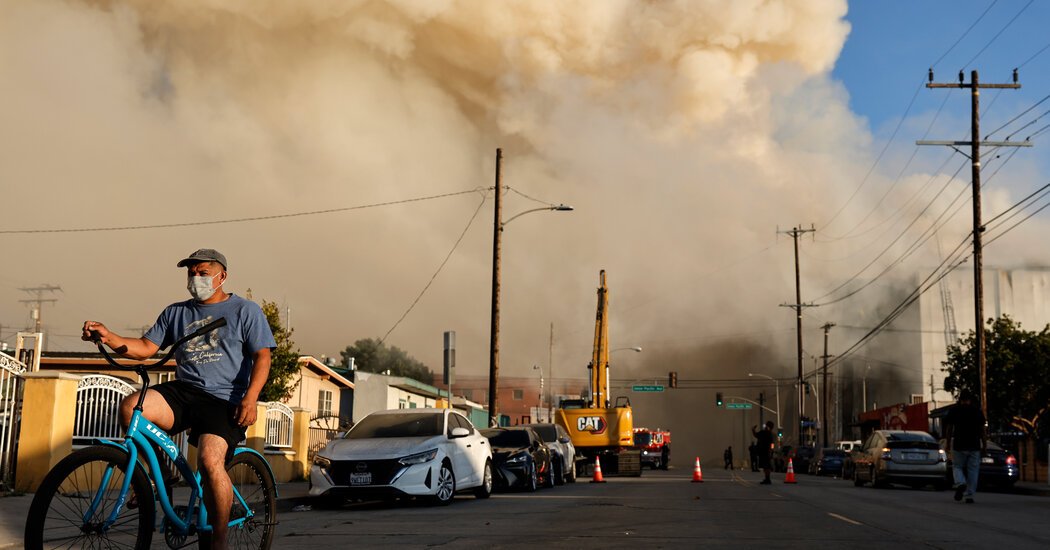
Smoke spread over the Los Angeles region on Sunday as a fire at a cold-storage warehouse in the Boyle Heights neighborhood continued to smolder for a fifth day.
Firefighters are making progress at stopping the blaze, and the smoke may soon begin to clear, a spokesman for the Los Angeles Fire Department said on Sunday afternoon.
Air quality in central Los Angeles and the San Gabriel Valley continued to be affected by particulates in the smoke. The South Coast Air Quality Management District extended a warning about poor air quality until midday on Monday and indicated that the wind could disperse smoke as far as Riverside and Orange Counties.
In a statement, the air quality agency said that particulates had reached “very unhealthy” levels in some areas on Saturday night and Sunday. The agency was expecting the most significant smoke effects north and east of the fire, and in the San Gabriel Valley and parts of the western Inland Empire.
Major sporting events on Sunday, including the World Cup match between Belgium and Iran at SoFi Stadium and the Los Angeles Dodgers game against the Baltimore Orioles at Dodger Stadium, continued as scheduled.
The blaze at the Boyle Heights warehouse, east of downtown Los Angeles, broke out on Wednesday afternoon and has been challenging to fight because the building’s walls are thick and insulated, like a freezer. Firefighters have also needed to extract ammonia, which was used as a refrigerant, and millions of gallons of frozen food.
Thank you for your patience while we verify access. If you are in Reader mode please exit and log into your Times account, or subscribe for all of The Times.
Thank you for your patience while we verify access.
Already a subscriber? Log in.
Want all of The Times? Subscribe.
Food
An unusual strategy helps some tropical butterflies live 25 times longer than their relatives


ATLANTA — Since most butterflies live a short time, fluttering between colorful flowers for a few weeks before dying, a few rare exceptions have stumped scientists. Now, some long-lived tropical butterfly species are shedding light on the secrets of longevity.
Butterflies belonging to the Heliconius genus, which inhabit the tropical rainforests of South and Central America, have lifespans that vary wildly. The Dione juno butterfly lives for 14 days after reaching adulthood, while Heliconius hewitsoni lives for 348 days — nearly 25 times longer.
Other Heliconius species also have impressively lengthy lives, enduring between 106 to 277 days, according to a study on the phenomenon published Tuesday in the journal Nature Communications. Some scientists have speculated that Heliconius’ extended adulthood is due to the insects consuming an enhanced diet, rather than relying purely on carbohydrates like other butterflies.
But the exact reasons behind this unexpected longevity have been unclear, which is what inspired Dr. Jessica Foley, the study’s lead author and a postdoctoral scholar at Tufts University’s Jean Mayer USDA Human Nutrition Research Center on Aging in Boston, to take an in-depth look at the intriguing butterfly genus.
“We see vast differences in lifespan across the animal kingdom — adult mayflies famously live only for a day, whereas some whales and sharks can live for hundreds of years,” Foley wrote in an email. “I’m interested in the evolutionary basis of these kinds of lifespan differences because they might hold insights relevant for healthy aging in humans.”
Foley and her colleagues discovered that while nutrition has its part to play, some Heliconius have also evolved an anti-aging mechanism the researchers are still unraveling, and how it could be a model for understanding human longevity.
Evolving a special diet
Studying the “extreme agers” of the animal kingdom is an uphill task for scientists, especially if they have to wait centuries for a species to reach what is considered old, Foley said.
Lesser-studied Heliconius butterflies presented the perfect case study since researchers could observe their entire life cycle in about a year. Only one other known butterfly, Myscelia cyanaris, lives longer than Heliconius, with a maximum lifespan of 380 days, but there is little data to suggest why.
Foley and her collaborators combined an expansive dataset to look at lifespan and aging patterns across the Heliconius genus, using information collected from commercial butterfly houses and mark, release and recapture studies, as well as controlled experiments.
The authors wanted to see whether removing an unusual food source from the diets of these butterflies would shorten their lifespan, she added.
Most adult butterflies feed exclusively on flower nectar, fueled only by carbohydrates rather than the amino acids and lipids — used for egg and sperm needed to reproduce — they received from plant material as caterpillars before metamorphosing.
“The general evolutionary strategy is to reproduce as much as they can until those resources are spent, which doesn’t take very long for these small insects,” Foley said of the lipids and amino acids. “They usually die soon after this finite resource is used up.”
However, most Heliconius species have adapted to feed on pollen, even as adults, which could provide the insects with more energy, the authors concluded. Pollen also contains lipids, which help with energy storage but also boost immunity.
The authors closely studied the relationship between Heliconius and pollen to see what health benefits the butterflies gained from their diets.
“I wanted to understand the real extent of this lifespan extension in Heliconius, to understand whether it was also accompanied by slowed physiological aging, and to figure out whether they would still show a lifespan extension — indicating evolved mechanisms of longevity — even without the pollen,” Foley said.
Of the 28 Heliconius species the researchers studied, only six were non-pollen-feeding, and they lived between 14 to 98 days. But the team’s observations showed that even when pollen was withheld, the Heliconius butterflies still lived much longer than their non-pollen feeding relatives.
An evolutionary mystery
The team also used a unique device to measure age-related decline in older butterflies with a grip-strength test. They built a device called “The Pullinator,” or a perch lined with sandpaper that was attached to a lightweight wooden base.
“We placed this on a lab balance, zeroed the balance, and then gently held a butterfly by the wings and lowered it until it grasped the perch,” Foley said. “We then tugged until it let go — but as the butterfly tugged, the balance would drop negative, and we could use the maximum negative reading as an indication of how much weight the butterfly could carry before it let go.”
The Heliconius hecale butterfly species, which can live up to 277 days, showed little or no physiological decline during the grip-strength test, while the closely related Dryas iulia, which doesn’t feed on pollen and lives for 98 days, showed signs of age-related decline. Heliconois hecale also maintained body mass and muscle function for longer, even when deprived of pollen.
The findings showed that overall, many pollen-feeding Heliconius species had longer lifespans and slower rates of aging, suggesting that nutrition is an important factor. Pollen-derived amino acids also help the butterflies continually produce more eggs as adults, lengthening their reproductive lifespans, Foley said.
But given that permanently removing pollen from the diets of the butterflies seemed to have no negative impact on their longevity, the researchers suspect that, much like the insects evolved a pollen-based diet, they have also evolved to live longer.
“We show that these butterflies do have evolved mechanisms of longevity, and that they also seem to have evolved a delayed physiological decline, making them excellent new models for studying the mechanisms allowing for long life,” Foley said. “However, we do not yet know what these mechanisms are.”
Longevity in the animal kingdom
Foley’s colleagues are interested in investigating the more mysterious longevity mechanisms of Heliconius, as well as the butterflies’ robust cognition — they have large brains and impressive long-term memory, even as they age, she said.
Studying worms, flies and yeast has enabled scientists to better understand how the mechanisms of aging work in humans. Looking at more examples from the animal kingdom can be used to identify solutions that evolution has found for the problem of aging, Foley said.
The new research shows that Heliconius can be a potential model insect group for studying increased longevity, including adaptations that could slow aging and have potential applicability to humans, said Dr. Jaret C. Daniels, curator and interim associate director for the McGuire Center for Lepidoptera and Biodiversity at the Florida Museum of Natural History. Daniels was not involved in the study.
“This study reinforces the utility of many insect groups and important model organisms for various fields of research,” Daniels said in an email. “Since many insects are often overlooked or underappreciated/undervalued by humans, studies like this can help change that perspective.”
Food
Freed from Cambodia’s scam compounds, trafficking victims face a new crisis


PHNOM PENH, Cambodia — All over this Southeast Asian city are vestiges of the multibillion-dollar online scam industry, which thrived here for more than half a decade until a recent government crackdown.
There are luxurious high-rise towers overlooking the Mekong River, where entire floors are now deserted following police raids that cleared out the illicit operations hidden there. Disintegrating cardboard boxes and bits of Styrofoam litter the entrance of a branch of Prince Supermarket, after its parent company—the massive Cambodian conglomerate Prince Holding Group—was slapped with U.S. sanctions for allegedly running industrial-scale scam compounds.
But the crackdown has created a secondary crisis: thousands of stranded foreign workers transported to Cambodia by the online scam operators and forced to work as hostage employees are now roaming the streets of Phnom Penh, after being freed when the scam operations closed. NGOs, including Amnesty International, say many of the workers are victims of human trafficking. They are now at the center of a silent humanitarian crisis in Cambodia, aid workers say, left with few options and abandoned amid the highly-publicized government crackdown.
“The government has only addressed half of this problem,” said Mark Taylor, a consultant on human trafficking issues who previously led a USAID-backed program in Cambodia. “But it is totally ignoring what fueled that problem,” he added, namely the tens of thousands of vulnerable migrants that were lured into the scam industry and are now at risk of being re-trafficked.
Cambodia was an epicenter of the global scam industry until late last year, when foreign pressure pushed the government to mount a large-scale crackdown on these operations. The scams, which operate online, work by convincing victims to put their money into fraudulent investment schemes. As victims keep depositing funds, they see profits, convincing them to put more in – until, one day, all their money evaporates.
The FBI and others have termed these schemes “pig-butchering” scams, and according to the agency’s Internet Crime Complaint Center, Americans were defrauded of more than $20 billion last year through these types of scams. This number has been growing every year, according to the FBI’s data.
Behind these online operations was a system of coercion.
More than two dozen migrants from Indonesia, Uganda, Ghana and Sierra Leone NPR interviewed recounted similar stories: they were offered jobs with decent wages, free accommodation and food, only to find themselves held against their will and forced to meet strict quotas as scam workers.
Shuiab, a 24-year-old Ugandan man, said he was promised $850 a month as a delivery driver before being taken to a compound hidden behind a casino and forced to scam Americans. Another man, Wilson, said he was electrocuted for failing to meet his quotas. NPR is identifying both men by their first names only because they fear reprisals.
“They have a place called the black room,” Wilson said, referring to the owners of the scam centers. “Inside that black room, they can do anything to you.”
United Nations agencies, Amnesty International and other organizations have long documented the use of forced labor and torture within this industry. In a report on the Cambodian government’s scam crackdown this June, Amnesty International said it had interviewed 73 people released from compounds in recent months, and determined all were victims of human trafficking.
Last October, the U.S. sanctioned a massive Cambodian conglomerate called Prince Holding Group and indicted its chairman, Chen Zhi, for allegedly directing “forced-labor” scam compounds in the country and laundering billions in criminal proceeds. In January, Chen was extradited from Cambodia to China, where he was born, with a bag over his head.
Chen’s lawyers have denied any wrongdoing and are fighting the case in U.S. courts.Beijing has continued to extradite several other alleged Chinese scam kingpins from Cambodia – bosses who were once thought to be untouchable, researchers with knowledge of these organized crime groups said. Alongside the police raids, the downfall of these tycoons put pressure on scam companies, which have relocated from Cambodia in recent months, researchers and former scam workers said.
The collapse of these tycoons quickly emptied the infrastructure they left behind. Some of the scam compounds in Cambodia were like cities themselves, massive and self-contained, with supermarkets, karaoke bars, barber shops, pharmacies, and other services inside them. One site, which NPR visited in March after it was emptied out, could accommodate 20,000 workers, according to the UK government which sanctioned its owners later that month.
With every compound that closed, tens of thousands of migrants were released onto the streets – without money, support, shelter, or even access to free food or water, according to aid workers. Instead, they’ve been met by a hostile bureaucracy. The Cambodian government has insisted that they pay fines for overstaying their visa, but those fines – $10 a day – can add up to thousands.
Embassies are working on behalf of their citizens to get the Cambodian government to waive the overstay fines, but the process is slow. While the stranded migrants wait, there is only one shelter for victims of trafficking in Cambodia that they can stay in, but it is full, with a waitlist of hundreds.
In recent weeks, NGOs helping the workers say the Cambodian authorities have stepped up detention of migrants for visa violations, cramming them in overcrowded detention facilities.
“Rather than identifying and supporting trafficking victims, Cambodian authorities have consistently treated people fleeing or being released from scamming compounds as irregular migrants – detaining them in substandard immigration detention facilities without access to lawyers or embassies,” the Amnesty report said, adding this is “in direct violation of…international obligations.”
In response to questions from NPR, Interior Ministry spokesman Touch Sokhak rejected the criticism, saying authorities have “rescued” hundreds of thousands of scam workers, including trafficking victims, and repatriated them “with the utmost care, in accordance with the law.”
But accounts from inside Cambodia’s detention system tell a starkly different story. In a text message shared with NPR by aid workers, a former scam worker described conditions inside one facility: free drinking water is available for only one hour a day and otherwise costs $2. He asked not to be named for fear of reprisal.
Food
Newsom declares state of emergency in Los Angeles for Boyle Heights warehouse fire
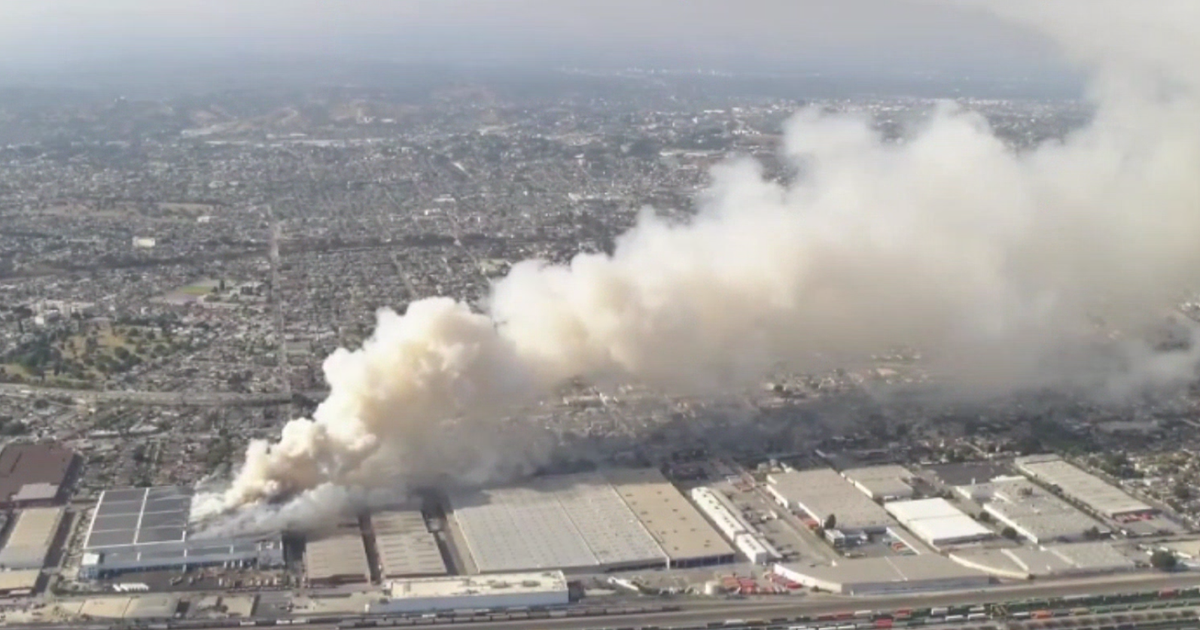
Firefighters faced renewed challenges Saturday at a large Boyle Heights cold storage facility fire, where conditions remain highly complex as Gov. Gavin Newsom and Mayor Karen Bass declared a local emergency to support response efforts.
The fire was first reported on Wednesday afternoon at the 500,000-square-foot Lineage Big Bear facility at 1400 S. Los Palos Street, which is used to store frozen foods.
“The best way to describe this is like a giant cooler,” said LA Fire Chief Jamie Moore, who added that the structure was built with corrugated steel walls filled with dense foam insulation and reinforced interior steel panels.
The building also used ammonia in its refrigeration system to maintain extremely low temperatures for frozen food storage, which may have fueled the fire on its initial day of burning.
“Imagine your refrigerator having a fire. And so, you have the shell of the outside and the shell on the inside,” Moore said during a news conference on Saturday afternoon. “What protects everything from the weather, or whatever the temperature is on the outside, is the rubber. … If you can imagine, that’s exactly what’s happening here.”
He said that with the help of water-dropping helicopters, LAFD crews have controlled the fire to approximately half of the building. The unaffected half, however, is filled with food that has begun to thaw as they had to turn off the refrigeration system and remove ammonia from inside. He said that the internal temperature of the building remains at around 45 degrees because of the insulation.
Moore said the nature of the materials inside has made the fire difficult to control, as the foam insulation continues to burn slowly once ignited.
Crews have relied on continuous helicopter water drops since the start of the incident to keep the structure cooled and prevent further escalation. Officials have also used large aerial ladder pipes, directing thousands of gallons of water per minute onto the building to contain the blaze.
“We stepped up our game. I reached out to the county and we started using contract helicopters,” Moore said. “Our contract helicopters … drop about 3,000 gallons of water at one time. On top of that, we’re able to incorporate blaze tamer gel, which is a fire retardant gel, which is gonna help encapsulate the smoke … and smother the fire.”
So far, he said that the process has been effective as they’ve helped cool things down and further mitigate the fire burning the roof.
At around 5:10 p.m. on Sunday, aerial footage showed another flare-up in the fire on the roof of the building. Another massive plume of smoke extended into the air as the fire appeared to be burning down the exterior wall and onto a lower roof.
85 million pounds of frozen food complicate firefighting efforts
With an estimated 85 million pounds of frozen food still inside the facility, firefighters say access is extremely limited due to zero visibility and unstable interior conditions.
“All that food is slowly beginning to rot. It’s no longer frozen. It’s warming up and it’s going to start to spoil,” Moore said. “Initially it was reported to us that the majority of that product was bread and wheat products. However, we’re slowly learning as we get into this building that it’s far from that; there’s a lot of meat products.”
Moore said that chicken, beef, pork and fish were being stored inside.
Officials stressed that crews are not entering the building or attempting to manually remove product. Instead, they are working to isolate unaffected areas while evaluating how to safely remove remaining goods before spoilage creates additional biohazard concerns.
“What we are trying to do now is to figure out the uninvolved area – how we can remove that food before it starts spoiling and becoming a biohazard concern,” Moore added.
Authorities said hazardous material risks have largely been mitigated, but the situation is now shifting toward potential biohazard issues as food inside the facility remains unrecovered. Officials emphasized that the priority is determining how to safely manage and remove the stored product while maintaining containment.
No injuries reported; no evacuation or shelter-in-place orders issued
Despite the severity of the incident, officials noted that no firefighters or civilians have been injured. Residents were advised that while smoke may be irritating—particularly for those sensitive to air quality—there is currently no order for evacuation or shelter-in-place, despite a similar order already having been issued and lifted twice since the fire’s ignition.
“If you are sensitive to smoke, please be cognizant of that and try to stay indoors,” cautioned Moore. “But there is nothing in the air that is so dangerous that we have to do evacuations or even shelter-in-place.”
Mayor Karen Bass said her chief concern was for the public’s safety and health.
“We’re not concerned in terms of the fire spreading or anything like that. But we are concerned about the biohazard smoke. No smoke is good, but especially the smoke that could be toxic because of the chemicals that were needed to keep the food frozen in the facility,” Bass said.
Two shelter locations have opened to support anyone affected by the fire, including at the Pecan Recreation Center, which is located at 145 S. Pecan Street, Los Angeles, CA 90033 and City Terrace Park, which is located at 1126 N. Hazard Avenue, Los Angeles, CA 90063.
“We are going to be distributing masks and air filters, thank you to the Red Cross and our other partners,” said Bass, who said she anticipates talking to Governor Newsom later in the day to issue a joint emergency declaration.
“The Governor will be prepared to respond to our State of the Emergency when that is ready with whatever resources we need to do what the Chief described, which is moving the toxic materials away from here and disposing of them in a way that we will avert a major environmental disaster,” Bass said. “This is about prevention. This is about protecting our public’s health.”
Bass, Newsom issue emergency declaration for resources
By Saturday night, both the mayor and Gov. Gavin Newsom had issued emergency declarations, citing the scale and complexity of the incident.
The declaration is intended to provide the city with greater flexibility to coordinate emergency response efforts, secure additional resources, conduct environmental remediation, and seek state and federal assistance.
“While the LAFD continues making progress, this is a major, multi-jurisdictional incident. I’m issuing an emergency declaration to ensure the City has the resources it needs as this operation continues and to keep the community safe,” said Mayor Bass. “The City and County have opened spaces for families seeking relief from the smoke, and we will continue working around the clock and doing everything possible to put this fire out completely.”
During Saturday afternoon’s news conference, Bass said that the joint state of emergency was filed with Newsom’s office.
She said that the Emergency Operations Center has been activated and that they’ve asked Newsom to waive regulations that could hinder response and recovery efforts, and that recovery assistance be made available through the state.
“We basically told the governor that we will be in touch from the county and the city in terms of ongoing requests for mutual aid as well as monetary assistance so that we can get this job done,” Bass said. “Our concern, obviously, is putting out the fire, but to learn what was in this storage center … really presents an entirely different picture.”
LA County Supervisor Hilda Solis also spoke at Saturday’s conference.
“I’m deeply concerned about the impact on our residents,” Solis said. “The radius of the fire extends to about 2.5 miles. In unincorporated East Los Angeles we’re talking about 250,000 households. That’s why this is important.”
Gov. Newsom’s office shared a statement regarding the emergency proclamation late Sunday night, which they said would enable the state to further support the ongoing local response.
“California is mobilizing to support Los Angeles as firefighters and emergency personnel continue their work to contain this fire and protect surrounding communities,” Newsom’s statement said. “While local officials continue to lead this response, the State of California is prepared to help safeguard public health, support emergency operations, and assist impacted residents. We are coordinating closely with our local partners, deploying specialized expertise, and pre-positioning critical supplies so communities have the support they need both now and throughout recovery.”
Among the resources being deployed to Los Angeles were 5.5 million N95 respirator masks, commercial-grade air purifiers for evacuation centers, bottled water and emergency supplies and additional air quality monitoring equipment.
Additionally, California Office of Emergency Services Fire and Rescue Branch leaders with “specialized technical expertise” are en route to work with local officials to provide consultation on suppression strategies and operational considerations, according to the release.
Residents question long-term health impacts
As suppression efforts continued, residents voiced concerns about the potential long-term environmental and health impacts on the surrounding community.
On Saturday afternoon, South Coast Air Quality Management District officials said that a particle pollution advisory was extended until at least 12:30 p.m. Sunday. They said that after the fire’s reignition on Friday night, sensors showed that PM2.5 levels were unhealthy.
Two smoke relief centers have been opened for people impacted by the incident. They can be found at:
Pecan Recreation Center at 145 S. Pecan Street
City Terrace Park at 1126 N. Hazard Avenue
Lineage, the building’s tenant and operator, released a statement indicating that the fire may have originated from work being performed by a third-party contractor handling solar panels on the roof.
“Lineage is the tenant-operator of this building,” the company said in a statement. “At this time, we believe the fire began while testing was being conducted by contractors of the third-party owner of the solar array located on the facility’s roof. This facility is not used for the storage of hazardous materials. It primarily serves as a temperature-controlled storage facility for frozen food before it makes its way to Greater Los Angeles area communities and beyond. Our understanding from LAFD and AQMD is that there have been no measurable ammonia concentrations recorded in the community since the fire started. Additionally, Lineage has proactively taken additional steps to pump out the ammonia and transport it offsite, removing the possibility of ammonia posing a risk to the community. This facility and the supply chain it connects with employ hundreds of local jobs. We are grateful that no team members at the facility were harmed.”
Meanwhile, fire crews continue to monitor the structure and adjust tactics as they work to contain the long-burning industrial fire and reduce environmental and health impacts to surrounding communities. Authorities cautioned that extinguishing the fire could take days or even weeks.
“I do want to be transparent to the public: this work is far from over. Because of the massive scale of this cold storage facility, deep pockets of smoldering fire remain buried under structural debris and solar panels,” said Los Angeles County Fire Chief Jon O’Brien. “Our city firefighting brothers and sisters are executing a meticulous, deeply challenging operation to bring the fire under control. Because of this, incident operations will continue into the foreseeable future.”


What happens now UK PM Keir Starmer has resigned? #KeirStarmer #BBCNews
Subscribe to our channel here: https://bbc.in/bbcnews For the latest news download the BBC News app or visit BBC.com/news …


A look back at Keir Starmer's political career. #KeirStarmer #UKPolitics #BBCNews


First round of U.S.-Iran negotiations ends and U.K. PM resigns: Morning Rundown
The U.S. and Iran establish a road map for reaching a final deal during negotiations in Switzerland. Keir Starmer says...


UK PM Keir Starmer resigns. Who will succeed him?
Keir Starmer announced Monday he is stepping down as Britain's prime minister, yielding to intense pressure from his own …


Tobey Maguire’s ex-wife Jennifer Meyer welcomes third baby at 49, her first with fiancé Geoffrey Ogunlesi
Jennifer Meyer is a three-time mom! The jewelry designer, 49, confirmed she gave birth to her third child — her...


Concertgoer who fell to his death during Madison Square Garden show identified
NEW YORK — A 51-year-old Connecticut man fell to his death from an upper deck of Madison Square Garden during...


Iran has agreed to admit nuclear monitors into the country, Vance says
In remarks from Switzerland Monday, Vice President JD Vance touted what he called a “very, very good day” of negotiations...


What is the progress on US-Iran talks?
CNN's Nic Robertson reports from Switzerland on what progress has been made in the US-Iran talks after renewed tensions …


Read this before you vibe-code another app
Bob Starr was delighted with his vibe-coded website. “Boomberg” showed how much US tax money is going to tech companies,...


Andy Burnham will run to replace Starmer as UK prime minister | BBC News
Andy Burnham has reacted to Keir Starmer's resignation, and confirmed that he will try to replace him as Labour leader...
-

 Business1 week ago
How much of Musk’s wealth comes from government help? Virtually all of it
-

 Politics2 weeks ago
What to know about the stabbing that set off fiery riots in Northern Ireland
-

 Video1 week ago
Download fans say what they love about the festival. #DownloadFestival #BBCNews
-

 Video1 week ago
Why SpaceX IPO isn't about space. #SpaceX #ElonMusk #BBCNews
-

 HealthNews1 week ago
The people of Okinawa, Japan only eat until they are about 80 percent full, then stop — and the practice has been linked in multiple peer-reviewed studies to lower rates of cardiovascular disease, slo
-

 Food1 week ago
Pope Leo’s plane was grounded. Then the King of Spain stepped in to help
-

 TravelNews1 week ago
My Paternal Instinct Should’ve Warned Me About Netflix’s Maternal Instinct
-

 Video1 week ago
Claire Danes has the cutest stories about young Kirsten Dunst on 'Little Women' set