

Tech
Read this before you vibe-code another app


Bob Starr was delighted with his vibe-coded website. “Boomberg” showed how much US tax money is going to tech companies, and Starr launched it online immediately after making it. It wasn’t until months after the site went live that he realized there was a problem: a hidden SQL injection risk. It could’ve left the site open for an attacker to read or alter data they shouldn’t have access to.
“It was just a glaring oversight on my part. It was a complete blindspot in my state of learning this new technology and understanding it, and I’m sure there are others making the same mistake,” said Starr, a project manager in the tech sector.
“It was a complete blindspot in my state of learning this new technology and understanding it.”
Starr fixed the issue, but he isn’t alone. Across social media, there are horror stories about vibe-coded apps full of security vulnerabilities. Jer Crane, founder of PocketOS, posted on X about an AI coding agent wiping out his company’s production database. Joe Procopio, a serial entrepreneur and former developer, vibe-coded a web app to privately show demos of other apps he’d built. Hackers came, so he took the app down. “Now I do demos the old fashioned way, from my local machine over Zoom,” he wrote. “It’s sooo 2023.”
We’ve entered a new “era of personal software,” as The Verge’s David Pierce said, where anyone can use AI to create their own private apps that can do exactly what they want. But with it comes a new era of security issues. Apps may be easy to build, but they’re difficult to secure — especially in a world where AI can also be used to attack them.
“My general core take is that vibe coding is not bad because amateurs can build software. That’s actually the good part,” says Gabriel Bernadett-Shapiro, distinguished AI research scientist at AI-powered cybersecurity firm SentinelOne.
The danger, he says, is when a personal app drifts into the realm of business software and stores shared, hosted data without anybody realizing that shift has happened. And, he says, the calculus changes when vibe coding moves away from local apps for tracking migraines or meals or package deliveries and enters the realm of apps that handle customer logs, medical data, financial records, or internal documents.
“Those need to be held to a different standard. Even if it was built by one person in an afternoon. Even if the software creating the software was trivial. The moment that it touches other people’s personal data, then that’s when I think the standard changes.”
Jack Cable, CEO and cofounder of Corridor (the security platform built for AI-native software development), agrees.
“Vibe coding is not bad because amateurs can build software. That’s actually the good part.”
“Vibe coding is great for lower risk things,” Cable says, such as a prototype, or a fitness tracker that isn’t super sensitive. But financial records deserve more scrutiny, he says, as does anything on the public internet. “Are you exposing any of your own or other people’s data there?” he asked. “Think through what the threat model looks like, and if you’re not sure if something you’re doing is secure, better safe than sorry.”
That is what Max Segall, chief operating officer at the crypto wallet firm Privy, had done after he vibe-coded EzRun as a fun way of rewarding his kid with $10 in Ethereum every time the two went running together. Thankfully, a colleague found a critical flaw that would have let anyone modify user accounts to gain access — before launch.
In a more concerning and high-profile case in late January, a developer named Matt Schlicht launched a viral social network called Moltbook. It was built entirely for AI agents, and he did not write a single line of code. Within days, researchers at the security firm Wiz says it found the app’s entire production database wide open, exposing tens of thousands of email addresses and private messages. Moltbook patched the bug shortly after being told about it, but this wasn’t a one-off. Wired reported that researchers at cybersecurity firm Red Access found roughly 5,000 publicly accessible apps built with popular vibe-coding tools that had no authentication, and close to 2,000 of those appeared to be leaking sensitive data like medical and financial information, strategy documents, and even logs of chatbot conversations.
To be fair, plenty of professionally made pre-AI software is woefully insecure, too. But just as vibe coding exponentially increases the number of apps being produced, the number of security risks is also likely skyrocketing. And it adds the risk of overconfidence. When an AI tool tells you code is secure, it’s easy to believe it.
“If you’re not sure if something you’re doing is secure, better safe than sorry.”
And in a normal vibe-coding session, nothing stops to check on its own unless you’ve installed something that has, which most casual coders have not. The build just keeps going. The security tools that exist have to be invoked. While Claude Code has a /security-review command that scans for vulnerabilities, you have to ask it to do so. There’s an automatic version, but only if you set it up to run on pull requests in advance, which is something that most casual builders aren’t doing.
OpenAI’s own coding agent Codex has a built-in security agent, Codex Security, that scans commits as they land and re-scans its own proposed patches, but it’s aimed at developers with real version-control workflows, not someone chatting an app into existence. For everyone else, the takeaway is simple: You have to prompt for security up front when you build, and again at the end, especially, any time the tool has access to data you care about.
“A lot of security is contextual,” Cable says, so while it definitely doesn’t hurt to run a coding agent’s own review, he cautions against having a false sense of security from it, especially when the agent doesn’t understand your threat model, or you haven’t given it the correct guidance.
Bernadett-Shapiro says that his biggest concern is not buggy AI-generated code, but a lack of authentication, something developers may not think about when they transition an app they run locally into the cloud with a bunch of configuration options they don’t understand, leading to sensitive data being exposed. This is the failure that worries him most, and for good reason: Apps that run fine locally put on the cloud can be like leaving a box of secrets open on the sidewalk — something researchers keep finding.
AI is good at finding bugs when prompted. There have been improvements in models with things like Mythos, the same Anthropic model that set off alarm bells for how easily it finds vulnerabilities to attack, which can also be used to harden apps vibe coders are building. Bernadett-Shapiro says GPT-5.5-Cyber, or even the base models of other applications, can assess the security and identify issues in an app that even a skilled developer may have looked over. Of course, he points out that people may not understand security tradeoffs they’re making or even ignore warnings as acceptable risk.
“A lot of security is contextual.”
Some of the scaffolding is starting to exist. OWASP, the nonprofit behind many web security standards, has published an AI security verification standard aimed at organizations. Firms like Trail of Bits have started releasing “skills,” add-on instruction packs that point a coding agent at specific security tasks, like flagging insecure default settings or hardcoded passwords before they ship. Skills have to be specifically triggered, so they don’t fit very naturally into the flow of development, Cable says, and it’s hard to keep them updated and synchronized across coding agents and as the codebase changes.
Beyond that, skills can cut both ways, because malicious skills also exist.
In February, 1Password’s Jason Meller examined the most downloaded skill on a popular OpenClaw skill registry and found that it directed users to install a dependency that ended up being malicious itself. It’s still the Wild West out there and can be difficult to tell whether a skill will harden your app or hand an attacker your credentials.
The potential of insecure vibe-coded apps isn’t a problem limited to hobbyists. Cable says engineers and even sales and marketing teams at big companies are now shipping far more agent-written code than before. Security teams need baseline visibility into how the agents are being used, he says, as well as guardrails that get enforced — either through skills or through products like the one Corridor sells, which aim to stop flaws before the code is even written.
For individuals, Cable’s guidelines are much simpler: Be aware that a model running locally on your own computer is far less risky than one made public, especially if it contains sensitive data.
“Literally overnight, the way most companies produce software has changed completely,” Cable says. He’s not especially worried about the coding agents themselves as long as they’re given the right guardrails in which to operate. The models themselves are increasingly built on a memory-safe stack that eliminates entire classes of vulnerabilities to begin with. “I do think there is reason to be optimistic here,” he says.
Government affairs specialist Jeff Rothblum vibe-coded an app for tackling mountains of tedious data entry with security in mind. He thought about what information the app holds, how sensitive it is, and what could happen if it got out. It’s a striking approach because it is so rare, and because the ground beneath us is shifting so quickly.
While working as head of government affairs and strategy at Lilt, he had to submit input forms to various government committees to get ideas into appropriations bills. No two forms are alike, so lobbyists may submit dozens or even hundreds of unique ones in a six-week period. After eight 75-hour weeks, and a layoff, he built a tool in case he ever had to do this again. It’s an app that scrapes links and due dates into a single dashboard and uses an LLM to prepopulate each form, so users only need to review and edit it (and paste in an account number) before submitting.
Vibe-code the app of your dreams, but think through what data the app is storing and has access to and what could go wrong.
He was well aware of the risk because he didn’t write his own code. “The last time I wrote code was probably in undergrad in 2006 writing Fortran to analyze fluid flows as an aerospace engineer,” Rothblum told The Verge. The biggest risk is that companies could inadvertently leak strategies or sensitive lobbying rationale, which stay private even when the filings are public. He’s mitigating this risk by running regular security reviews in Claude, keeping user data local rather than on his servers and building toward stricter retention safeguards.
He has vibe-coded his app to clear the browser and is upfront about the page sending data to Claude, linking to its retention policy. He’s working on a version of the app in which nothing a user types is stored by AI, even briefly, and a separate version that would let users route everything through their own LLM rather than his Claude instance.
While Rothblum has thought of building a broader lobbying intelligence tool, he says that if he does start working with more sensitive data, he intends to shell out four to five figures to pay an actual security engineer to review his code.”I’m happy with open-source stuff and I’m happy with ephemeral stuff, but everything else kind of scares me,” he says.
It is ideal to have a human expert review code, but Cable says that’s becoming a bottleneck. The open question, he says, is what the world looks like when most code ships without any human reading it and how we secure that world.
For now, the answer for the rest of us is smaller and more within reach: Vibe-code the app of your dreams, but think through what data the app is storing and has access to and what could go wrong. Ask it to build it with security in mind, and run code reviews after each change, including the patches the AI writes itself. Pay extra close attention before you move it from your own device into the cloud or give it access to any sensitive data or accounts. The difference between a fun project and a horror story starts with knowing what questions to ask.
Tech
Sam Altman’s Orb Startup Investigated Financial Misconduct Allegations
Tools for Humanity, Sam Altman’s eyeball-scanning startup, hired two law firms last year to investigate allegations of financial irregularities at the company and bribery of foreign officials in Thailand, people familiar with the investigations told Business Insider.
One of the probes, Business Insider has learned, looked into Tools for Humanity’s rollout in Thailand with a company linked to a South African businessman whom U.S. and Thai officials have accused of involvement in transnational cyber-fraud scams.
The other investigation reviewed concerns including allegations that senior company leaders approved six- and seven-figure payments to a foreign firm to boost the value of the Worldcoin token, a potential violation of Securities and Exchange Commission rules, people familiar with the investigations said.
As a result of the investigations, Tools for Humanity severed ties with a business partner in Thailand and strengthened its policies and controls, a company spokesperson told Business Insider. Following the investigations, Tools for Humanity said it is not aware of any facts establishing a violation of the Foreign Corrupt Practices Act, a federal anti-bribery law, by the company or any of its employees.
“When concerns are raised, we take them seriously, engage independent outside experts to review them when appropriate, and take action as warranted based on what we learn, as we are doing here,” the spokesperson said.
Tools for Humanity was cofounded by one of the tech world’s most notable figures. Altman, better known for his role as CEO of OpenAI, is one of three people on Tools for Humanity’s board. Valued in 2023 at $2.5 billion, it has raised hundreds of millions of dollars from investors such as Andreessen Horowitz, Bain Capital, and Khosla Ventures.
The company’s goal: to distinguish humans from AI bots with iris scans performed by a volleyball-sized sphere called the “Orb.”
Altman didn’t respond to emailed requests for comment.
A staffer raises concerns
For one of the reviews, the company said it engaged law firm O’Melveny & Myers. The purpose of that investigation was to look into concerns raised by a company staffer about potential misuse of company funds, the people familiar with the investigations said.
O’Melveny examined allegations of personal expenses and corporate housing charged on company credit cards, the people said. The firm also looked into alleged misclassification of full-time employees as contractors to lower the employees’ tax burden, the people said.
The company’s auditing firm, BDO, also looked into the concerns raised by the company staffer about the startup’s financials, the people said. BDO declined to comment.
Separately, Tools for Humanity said it hired the law firm Sidley Austin. That firm looked into whether the company’s dealings in Thailand had violated the Foreign Corrupt Practices Act, these people said.
The Foreign Corrupt Practices Act is a federal law that prohibits companies from paying, offering, or promising bribes to foreign officials to obtain or retain business. Civil and criminal penalties can include hefty fines and prison time.
Findings from at least one of the law firm investigations were presented to the company’s board, according to one of the people familiar with the investigations. Tools for Humanity’s directors are Altman, Chief Executive Alex Blania, and Spencer Bogart, general partner at Blockchain Capital.
“We are committed to conducting business ethically around the world and adhering to the law wherever we operate,” the Tools for Humanity spokesperson said. “We maintain robust policies and practices designed to support that commitment, we enforce them, and we strengthen them when we identify areas for improvement.”
Regulatory roadblocks
Tools for Humanity was cofounded in 2019 by Altman and Blania, then a young physics researcher at Caltech. The company builds tools for the Cayman Islands-based World Foundation, which distributes the Worldcoin cryptocurrency token and aims to develop a global identity and financial network.
Until earlier this year, Tools for Humanity offered new participants the option to claim tokens of Worldcoin. Some Tools for Humanity staffers have received token grants as part of their compensation packages. Early investors in Tools for Humanity also received tokens, the company has said.
The value of the Worldcoin token stood at around 61 cents Sunday, a decline of 95% since its peak of $11.79 in March 2024, according to Coinbase.
As the company tries to recruit users for its World app and network, it has met regulatory roadblocks and questions about its iris-scanning and data collection. The company has been barred, paused, or investigated in many countries, including Spain, India, and Indonesia.
At home, the company has faced criticism for its all-or-nothing work culture, as Business Insider previously reported. A slew of high-level staffers have left over the past year, and in June it announced layoffs. The layoffs affected less than 15% of the company’s global workforce of roughly 500 people, a person familiar with the matter said. Tools for Humanity recently entered a new phase of its plan, focusing on building partnerships with businesses and demonstrating utility to users, the company said in a blog post.
A questionable business partner
Tools for Humanity has drawn scrutiny for its operations in Asia. In 2022, the company told MIT Technology Review that it launched an investigation after the magazine’s reporting showed that the company’s contractor in Indonesia had made payments to village officials, a potential violation of the country’s anti-corruption and anti-bribery laws.
Last September, Whale Hunting, an investigative journalism project run by the production company Brazen, reported that during Tools for Humanity’s rollout in Thailand, the startup had unwittingly done business with a publicly traded company tied to South African businessman Benjamin Mauerberger, also known as Ben Smith.
Thai courts have seized assets belonging to Mauerberger and issued an arrest warrant for him on fraud and money laundering charges related to an alleged transnational scam network, according to multiple news outlets.
A bill advanced in December by the House Foreign Affairs Committee named Mauerberger on a list of foreign nationals who could be subject to sanctions for alleged involvement in transnational “pig butchering” scams.
Tools for Humanity “entered into business with a partner in the region linked to an individual about whom serious allegations later emerged, but who had provided us with a false name and about whom those allegations were not known at the time,” the company’s spokesperson told Business Insider. “Once the company learned of the allegations, it retained Sidley to look into the matter, severed ties, and implemented more robust due diligence measures for vetting business partners.”
Mauerberger didn’t respond to a request for comment sent through a LinkedIn account listed under his name. His attorney, Witoon Kengngan, told reporters at a press conference in March that the criminal investigation of his client in Thailand was moving unusually quickly and suggested that it could be politically motivated. He said his client wouldn’t return to Thailand.
Thai officials have pursued their own, unrelated, probes into Tools for Humanity.
The company in November said it had halted operations in Thailand because of an order from the country’s Personal Data Protection Committee over concerns around the collection of biometric data. And Thailand’s Department of Special Investigation in January said that its investigation found that some 1.2 million Thai citizens had undergone iris scans and that most of them had been “incentivized by the promise of the cryptocurrency named ‘Worldcoin’ (WLD) while they misunderstood or [were] unaware of the required consent.”
The Department of Special Investigation didn’t respond to a request for comment.
Tech
LAUSD Superintendent Alberto Carvalho resigns amid FBI investigation

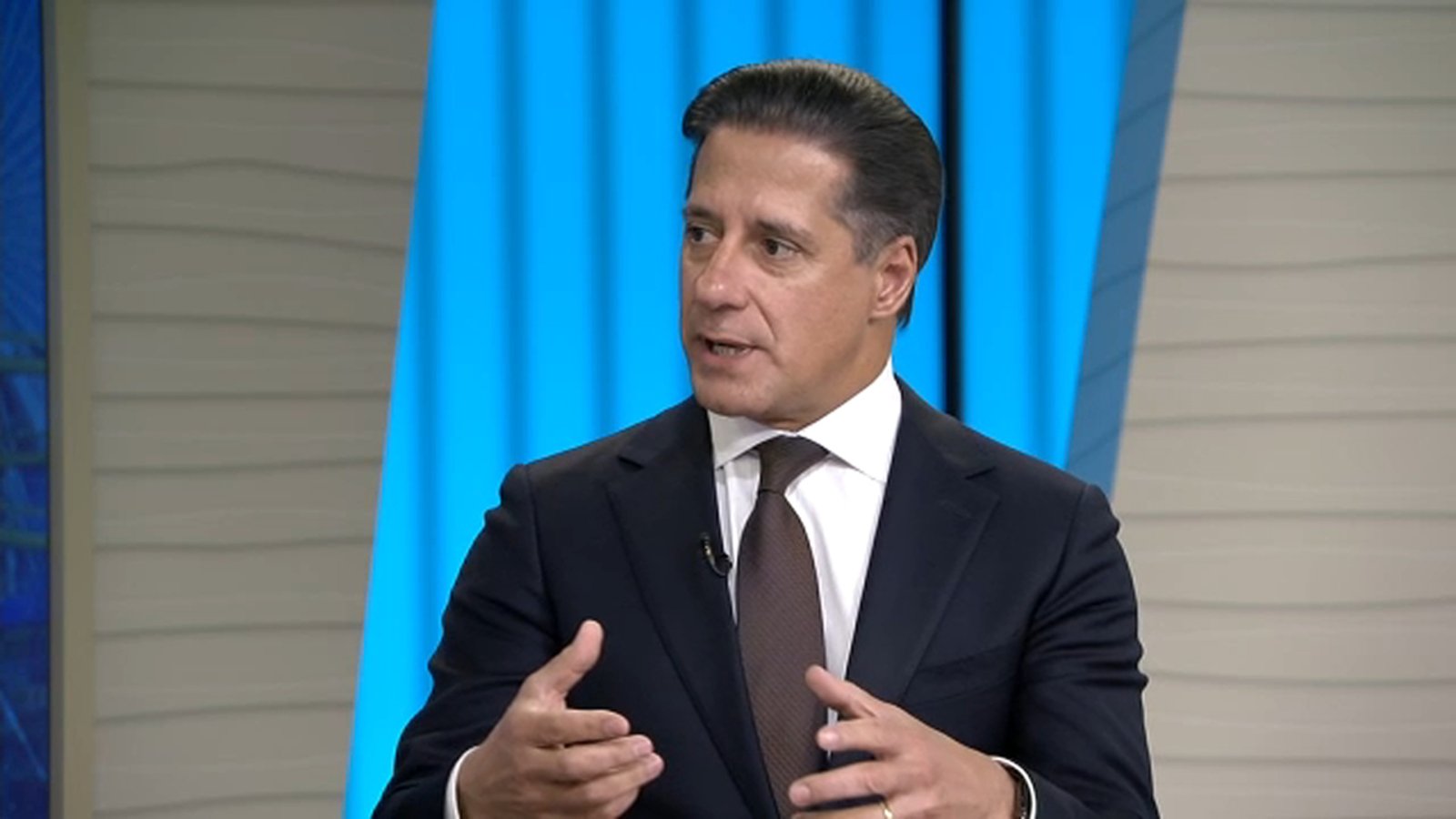
LOS ANGELES (KABC) — The superintendent of the Los Angeles Unified School District resigned Sunday night, nearly four months after the FBI served search warrants at his home and the LAUSD’s headquarters as part of an ongoing investigation.
An LAUSD spokesperson confirmed to Eyewitness News that the district received a letter of resignation from Carvalho.
“It has been a great honor to serve you,” Carvalho wrote in a letter addressed to “the students, families, teachers, staff, and community of LAUSD,” the Los Angeles Times reported. “Over the past four years, together, we have made historic progress – gains that belong to our students, our educators, staff and our communities.”
On Feb. 27, two days after the FBI conducted searches at Carvalho’s home and LAUSD offices, the district’s Board of Education voted unanimously to place him on leave pending the outcome of the probe.
“Mr. Carvalho remains confident that the evidence will ultimately demonstrate that he acted appropriately and in the best interests of students,” said a statement released in March, attributed to a spokesperson for Carvalho. “We hope the school board reinstates him promptly to his position as superintendent.”
Authorities have not charged Carvalho with any crimes.
The FBI also searched a third location near Miami. The Miami Herald reported the Florida property belonged to Debra Kerr, who previously worked with AllHere, an education technology company that had a contract with Los Angeles schools before it collapsed and its leader was indicted for fraud.
In 2024, Carvalho heavily touted a deal with AllHere for an AI chatbot named “Ed” designed to help students. But about three months after unveiling the technology and paying the company $3 million, the district dropped its dealings with AllHere, which collapsed into bankruptcy. Months later, founder Joanna Smith-Griffin was charged with securities and wire fraud, along with identity theft.
At the time, Carvalho denied personal involvement in the selection of AllHere, according to the Los Angeles Times.
“Mr. Carvalho respects the rule of law and the investigative process and has always acted in the best interests of students and within the bounds of the law,” the statement said. “While the government’s investigation remains ongoing, no evidence has been presented by prosecutors supporting any allegation that Mr. Carvalho violated federal law.”
Following the search of school headquarters, LA Unified said it was cooperating with investigators.
Carvalho became superintendent for L.A. in 2022. He previously led the public schools in Miami.
The Associated Press contributed to this report.
Tech
Australia sells advanced radar technology to Canada in record $1.7 billion deal
SYDNEY, June 22 (Reuters) – Australia said on Monday it will sell advanced radar technology capable of detecting long-range missiles to Canada under a A$2.5 billion ($1.75 billion) agreement, the country’s largest-ever defence export deal.
The agreement is Australia’s first overseas sale of the radar, known as Over-the-Horizon Radar technology, and will support Canada’s surveillance of the Arctic region.
“Today’s agreement marks a significant milestone in Australian defence trade and lays the foundation for deeper and mutually beneficial defence industry collaboration with Canada,” Prime Minister Anthony Albanese said in a statement.
Canada’s Arctic region represents about 40% of its total landmass, though it is sparsely populated and has little infrastructure. Much of Russia’s Arctic area, which is about a fifth of its landmass, faces Canada and the U.S. state of Alaska.
“Canada is reinforcing Arctic security through the Arctic Over-the-Horizon Radar project,” said Stephen Fuhr, Canada’s secretary of state for defence procurement.
“This project is part of a broader effort to build an integrated Arctic surveillance and communications network that will strengthen Canada’s ability to monitor, understand and respond to activity in the Arctic.”
Australia’s Jindalee Operational Radar Network can detect and track aircraft, ships and missiles up to 3,000 km (1,864 miles) away.
The deal to share the technology with Canada will create around 300 jobs in Australia and is the first stage of a broader collaboration between the two countries on the radar, Australia said.
($1 = 1.4269 Australian dollars)
(Reporting by Christine Chen in Sydney; Editing by Christopher Cushing)
Tech
Micron Must Do This on June 24, or Its Stock Could Crash


The AI boom has created a market where good results are no longer good enough. Investors have rewarded companies tied to artificial intelligence with premium valuations, but they have also become far less forgiving. A strong quarter can still lead to a falling stock price if management fails to convince Wall Street that growth is accelerating. We’ve already seen it happen to semiconductor leaders this year. Now it’s Micron Technology‘s (NASDAQ:MU | MU Price Prediction) turn in the spotlight.
And with the stock up nearly 300% year-to-date and roughly 830% over the last 12 months, expectations have never been higher.
AI Memory Demand: The Hottest Corner of Semiconductors
Micron’s rally hasn’t come out of nowhere. The company sits at the center of one of the tightest supply-demand imbalances in technology.
Demand for high-bandwidth memory (HBM), the advanced memory used alongside AI accelerators from Nvidia and others, continues to outpace supply. At the same time, prices for both DRAM and NAND memory have climbed as manufacturers prioritize higher-margin AI products and capacity remains constrained. Reuters recently noted Micron’s earnings growth is being driven by soaring memory prices and strong HBM demand.
The memory market is also highly concentrated. SK hynix, Samsung, and Micron control roughly 89% of the global DRAM market, according to Counterpoint Research, giving the trio unusual pricing power.
That combination of rising prices, tight supply, and explosive AI demand has transformed Micron from a cyclical memory maker into one of Wall Street’s favorite AI trades.
Beating Estimates Isn’t Enough Anymore
Micron reports fiscal third-quarter results on Wednesday, June 24, after the market closes.
According to Zacks, analysts expect fiscal Q3 revenue of approximately $34.8 billion and earnings of $19.72 per share, representing revenue growth of 268% and earnings growth of more than 930% year-over-year.
Those numbers are extraordinary. Yet they may not be enough. The market’s new standard is “beat and raise.” Investors want proof that future growth will exceed current expectations. Results matter, but guidance matters even more.
That’s exactly what tripped up both ASML (NASDAQ:ASML) and Broadcom (NASDAQ:AVGO) this year. ASML delivered a beat-and-raise quarter, but the increase in guidance was modest, leading to an initial selloff. Broadcom beat earnings estimates too, but its outlook failed to satisfy investors who had priced in even more growth, causing a bloodbath with its shares.
Micron faces the same challenge. Consensus expectations currently call for another strong quarter in fiscal Q4 and continued growth into fiscal 2027. To keep the stock’s momentum intact, management will likely need to exceed Q3 estimates, beat the whisper numbers circulating on Wall Street, and raise guidance for the current quarter and beyond.
Valuation Gives Micron an Edge
That said, Micron has one advantage Broadcom lacked heading into earnings: valuation. Broadcom entered earnings priced for near perfection. Micron doesn’t. Even after its massive run, Micron trades for less than 10 times forward earnings and carries a minuscule PEG ratio of approximately 0.07. Those metrics remain far below many AI-related peers.
Granted, Micron is no longer the bargain it was a year ago. Yet investors are still paying a relatively modest multiple for a company benefiting from AI-driven demand, rising memory prices, and supply shortages that industry leaders believe could persist well into 2027.
Key Takeaway
In short, Micron must deliver a stellar beat and an equally stellar forecast on June 24. Anything less risks a short-term selloff because expectations have risen almost as fast as the stock itself.
Regardless of how the market reacts immediately after earnings, the long-term story remains intact. AI demand continues growing, HBM remains supply-constrained, and memory pricing remains favorable. Those trends have driven Micron’s 830% gain over the past year, and they aren’t disappearing overnight.
Tech
Fed Chair Kevin Warsh Just Subtly Threw President Donald Trump and Jerome Powell Under the Bus in His First FOMC Meeting

It’s been a history-making last five weeks for Wall Street. In no particular order, we’ve witnessed:
The iconic Dow Jones Industrial Average (^DJI +0.14%), widely followed S&P 500 (^GSPC +1.08%), and technology-fueled Nasdaq Composite (^IXIC +1.91%) jump to record highs.
The largest-ever initial public offering in Wall Street’s history: Space Exploration Technologies (SpaceX).
The start of a new era at the Federal Reserve, with Jerome Powell’s term as Fed chair ending on May 15, and Kevin Warsh’s tenure officially starting on May 22.
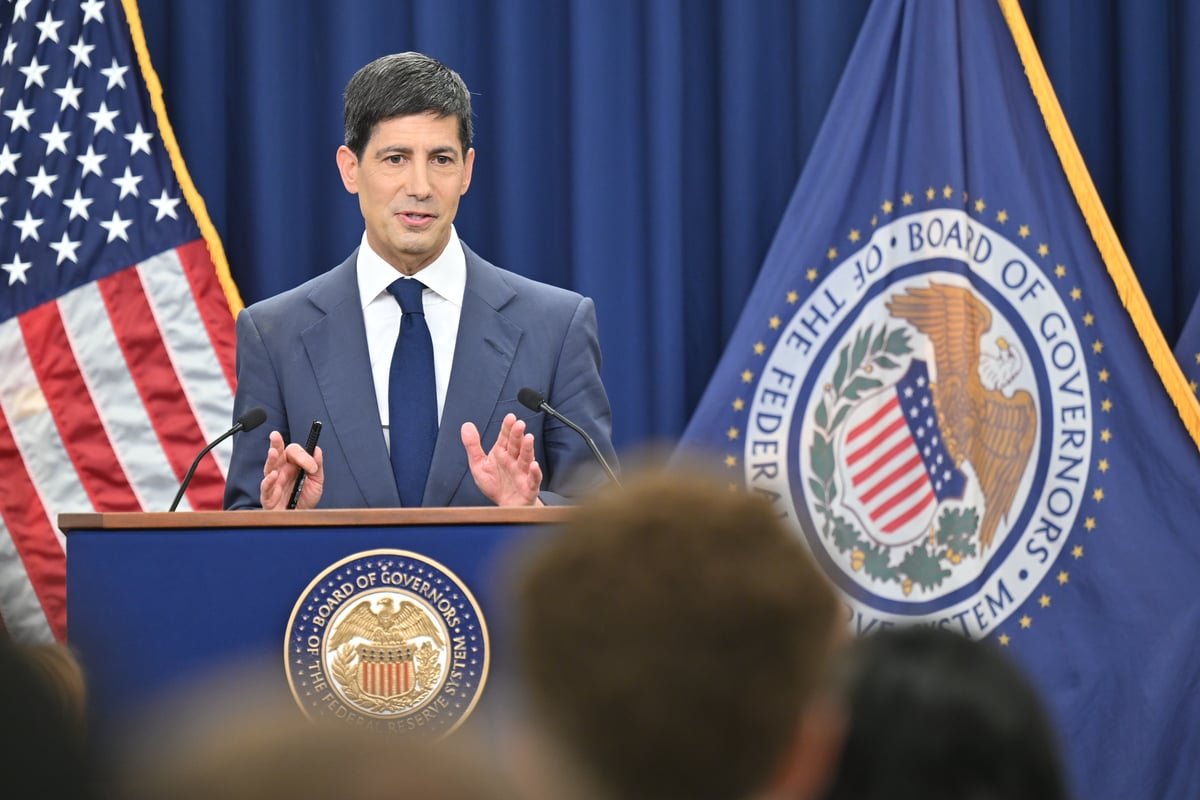
President Donald Trump’s handpicked successor to Powell became the center of attention for financial markets last week. On June 17, Warsh led his first Federal Open Market Committee (FOMC) meeting as Fed chair — and it was a doozy.
While some things went as expected, a Kevin Warsh-led Fed brought several surprises to the table for Wall Street and investors. This included subtly throwing President Trump and former Fed Chair Powell under the bus concerning inflation.
Fed Chair Warsh lumps the blame for elevated inflation on his predecessor and the president
As expected, the FOMC — the 12-person body, including Warsh, responsible for setting the nation’s monetary policy — left the federal funds target rate unchanged on June 17. But it’s what Fed Chair Kevin Warsh said while speaking with the press after his first FOMC meeting that’s raising eyebrows and sounding alarm bells.
Breaking from Powell’s tradition of sharing the FOMC’s thought process and offering forward-looking guidance, the Federal Reserve’s FOMC statement was short and to the point under Warsh, noting that “inflation remains elevated relative to the Committee’s 2 percent goal.”
During his press conference following the FOMC meeting, Warsh bluntly stated,
The commitment to deliver [price stability] is strong, unanimous, and unambiguous. And that’s an important message we’ve missed for five years. And we’re going to fix that.
Warsh plainly assigns blame for elevated inflation to his predecessor, Jerome Powell, for keeping interest rates at record lows for too long, as well as for allowing the central bank to balloon its balance sheet with long-term Treasury bonds and mortgage-backed securities.
But Powell isn’t the only key figure that’s subtly thrown under the bus by Kevin Warsh in his first FOMC meeting as Fed chair. While the new head of the Fed didn’t mention Powell or Trump by name in any of his remarks, his comments to the press about elevated inflation inadvertently placed the onus of blame on the president:
Inflation remains elevated relative to the Committee’s 2% goal. In part, reflecting supply shocks that have driven price increases in certain sectors, including energy.
Although Warsh didn’t directly address the Iran war, his singling out of the energy sector speaks volumes. Trump’s decision to attack Iran on Feb. 28, and Iran’s subsequent closure of the Strait of Hormuz, led to the largest energy supply disruption in modern history. Energy prices soared in the wake of this closure, pushing U.S. trailing 12-month inflation from 2.4% in February to a three-year high of 4.2% in May.
However, it’s worth pointing out that Warsh used the plural of “sectors” in his discussion. While energy prices tied to the Iran war remain the key catalyst for elevated inflation, President Trump’s tariffs have also been a persistent thorn for prices in the goods sector.
Bye-bye transparency! Hello, rate hikes?
But subtly assigning blame for persistently elevated inflation was only part of the story of Kevin Warsh’s first meeting as Fed chief. He also offered expected but disturbing guidance on what’s to come from policymakers and danced around a worrisome dot plot.
Perhaps the most profound statement made by Warsh in response to a question from the press was that “forward guidance isn’t the business we should be in.”
Before being confirmed as Fed chair by the Senate Banking Committee, Warsh’s testimony pointed to his desire to rid the central bank of most forward-looking guidance. He’s long believed that financial markets operate inefficiently when they move because of whims rather than facts.
The issue is that Wall Street and investors have become somewhat addicted to the transparency and forward-looking data provided by the central bank. Even though policymakers are fallible and the FOMC has been behind the curve in adjusting its monetary policy stance on several occasions, transparency and predictability are highly valued attributes by Wall Street and investors.
Without much in the way of forward-looking guidance, predicting what a Warsh-led Fed will do next becomes far more difficult. For the second-priciest stock market in history (dating back 155 years), a sudden lack of monetary policy transparency is unlikely to sit well with investors.
At the same time, Warsh’s first FOMC meeting as Fed chair coincided with the quarterly release of the Summary of Economic Projections, which is more commonly known as the “dot plot.” The dot plot anonymously projects where each of 19 policymakers (not all 19 are voting FOMC members) expects interest rates to head.
Warsh confirmed that he abstained from submitting forward-looking guidance via the dot plot. However, nine of his other 18 colleagues projected that interest rates would be higher than they are currently by the end of 2026.
Higher interest rates have the potential to slow the artificial intelligence data center build-out that has primarily fueled the Dow’s, S&P 500’s, and Nasdaq’s historic rallies.
It’s a brand-new era for the Federal Reserve, and Wall Street is simply along for the ride.


What happens now UK PM Keir Starmer has resigned? #KeirStarmer #BBCNews
Subscribe to our channel here: https://bbc.in/bbcnews For the latest news download the BBC News app or visit BBC.com/news …


A look back at Keir Starmer's political career. #KeirStarmer #UKPolitics #BBCNews


‘Summer House’ alum Danielle Olivera gives birth 10 weeks early, baby placed in NICU
Danielle Olivera announced that she gave birth to her baby boy, Aidan, 10 weeks early. On Father’s Day Sunday, the...


First round of U.S.-Iran negotiations ends and U.K. PM resigns: Morning Rundown
The U.S. and Iran establish a road map for reaching a final deal during negotiations in Switzerland. Keir Starmer says...


UK PM Keir Starmer resigns. Who will succeed him?
Keir Starmer announced Monday he is stepping down as Britain's prime minister, yielding to intense pressure from his own …


Tobey Maguire’s ex-wife Jennifer Meyer welcomes third baby at 49, her first with fiancé Geoffrey Ogunlesi
Jennifer Meyer is a three-time mom! The jewelry designer, 49, confirmed she gave birth to her third child — her...


‘Hazbin Hotel’ Creator Unveils ‘Prehistoria,’ Warner Bros. New Feature
As Annecy Animation Festival attendees try to avoid the scorching sun as much as they can, Warner Bros. Pictures Animation...
Kelly Ripa’s daughter Lola ‘could cry’ as she shares beautiful life update with her ‘best person ever’
Lola Consuelos is on cloud nine with her boyfriend Cassius Kidston, and recently declared she “could cry” with joy. Kelly...


Concertgoer who fell to his death during Madison Square Garden show identified
NEW YORK — A 51-year-old Connecticut man fell to his death from an upper deck of Madison Square Garden during...


Arizona’s first Buc-ee’s officially opens its doors in Goodyear
GOODYEAR, AZ (AZFamily) — Fans chanted Monday morning as they waited to walk through the doors of Arizona’s first Buc-ee’s....
-

 Business1 week ago
How much of Musk’s wealth comes from government help? Virtually all of it
-

 Politics2 weeks ago
What to know about the stabbing that set off fiery riots in Northern Ireland
-

 Video1 week ago
Download fans say what they love about the festival. #DownloadFestival #BBCNews
-

 Video1 week ago
Why SpaceX IPO isn't about space. #SpaceX #ElonMusk #BBCNews
-

 HealthNews1 week ago
The people of Okinawa, Japan only eat until they are about 80 percent full, then stop — and the practice has been linked in multiple peer-reviewed studies to lower rates of cardiovascular disease, slo
-

 Food1 week ago
Pope Leo’s plane was grounded. Then the King of Spain stepped in to help
-

 TravelNews1 week ago
My Paternal Instinct Should’ve Warned Me About Netflix’s Maternal Instinct
-

 Video1 week ago
Claire Danes has the cutest stories about young Kirsten Dunst on 'Little Women' set