

TravelNews
‘It would do very well:’ DeSantis agrees Buc-ee’s should open new spot at this Florida junction


ORLANDO, Fla. – The cult-favorite convenience chain Buc-ee’s is set to open several new locations in the Sunshine State — but one location in particular may be a good fit for the company, according to Gov. Ron DeSantis.
DeSantis took to X on Friday to respond to another user, who claimed that it would be “PHENOMENAL” to have a Buc-ee’s at the exit of U.S.-1 in Florida City, just before a stretch of highway leading to the Florida Keys.
“Yes and it would do very well,” DeSantis wrote in response.
DeSantis has been a longtime proponent of Buc-ee’s in Florida, even promoting an upcoming location that’s planned to open near Interstate 75 in Ocala.
In a news conference last year, he even joked that he approved an expansion project along that highway after learning that Buc-ee’s would be opening there.
“I said, ‘Sign me up,’” he explained at the time.
[RELATED: DeSantis holds 2024 news conference to discuss I-75 project]
That said, DeSantis has also described Buc-ee’s owner Arch Aplin III as a friend and political ally.
“He’s been supportive politically, and he’s involved in Texas. And sometimes if you’re involved on one side, the other side wants to attack you,” he said. “So I remember there was a couple years ago, there was an effort. These are probably paid left-wing groups. They wanted to boycott Buc-ee’s because the owner had given to (Texas) Gov. Abbott. And I’m like, ‘Yeah, that boycott ain’t going to work very well.’”
The Ocala location is slated to open in 2029. But it’s not the only location that’s planned for Florida.
FT. PIERCE
According to TCPalm, another gas station is expected to open in Ft. Pierce sometime in 2027.
Site plans unveiled last year show that this store is set to open north of Fort Pierce, likely on the southeast corner of the I-95 Indrio Road interchange.
Those plans also show that the site may feature up to 120 gas pumps and well over 700 parking spots.
TALLAHASSEE
During the same news conference where DeSantis discussed the I-75 project in Ocala, he also claimed that a new Buc-ee’s is coming to the state capitol.
There’s no opening date yet for this site, but according to DeSantis, this Buc-ee’s store is planned to be built off Interstate 10 near Tallahassee, which he said will “revolutionize driving on I-10.”
Per the Tallahassee Democrat, the Tallahassee store is slated to bring in around 200 new jobs, and the travel center itself could span 75,000 square feet, which would even overtake the gargantuan Ocala location.
PORT CHARLOTTE
Last year, News 6 also dug up property records showing that a rezoning project for a potential was approved along Harborview Road near Interstate 75, clearing the way for over 650 acres of development.
North and east of the highway, the project is slated to bring in plenty of residential development, though a smaller parcel of land to the southwest of I-75 may potentially become home to a new Buc-ee’s gas station, county records reveal.
TravelNews
Vice President JD Vance in Switzerland for Iran talks with days-old peace deal at risk

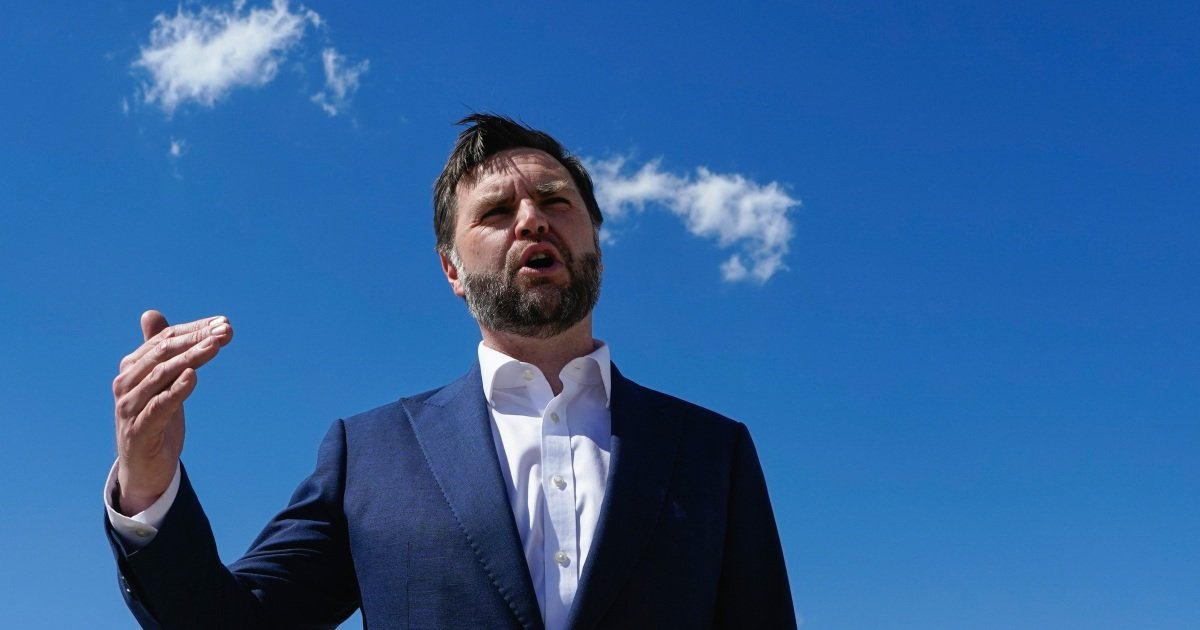
Vice President JD Vance held talks in Switzerland Sunday with Iranian officials, with the days-old peace deal at risk from Israel’s strikes on Lebanon and Iran’s threats to ships in the Strait of Hormuz.
Vance, joined at the negotiations by President Donald Trump’s special envoy Steve Witkoff and son-in-law Jared Kushner, met with a senior Iranian delegation to discuss the technical details of a memorandum of understanding signed last week. The talks were also joined by mediators from Qatar and Pakistan.
The deal has already been tested by fighting between Israel and the Iran-backed militant group Hezbollah in Lebanon, which Iran signaled would be central to the talks. “The first mandate of the negotiating delegation in Switzerland is to end the aggression in Lebanon,” a spokesman for Iran’s presidential office said.
Israel and Hezbollah have both accused each other of violating a ceasefire in southern Lebanon with continued strikes, even as the Trump administration and Iran press for fighting there to end.
Iran said Saturday that it has once again closed the Strait of Hormuz, a vital waterway through which 20% of the world’s oil passes, alleging ceasefire violations by Israel. The U.S. military has denied Iran’s claim to control the strait.
The Islamic Revolutionary Guard Corps’ navy warned ships not to approach the waterway, which Iran had committed to reopening under the interim peace deal.
After initial talks on Sunday, Vance told media that “great” progress had been made toward a future “where everyone can work together to promote peace and prosperity.”
Shortly after those remarks, Trump posted on Truth Social that “we’ll hit Iran very hard again, just like we did last week, only harder!!!” unless it stops “their highly paid PROXIES in Lebanon,” referring to Hezbollah.
In a Sunday morning phone interview with Fox News, Trump said he spoke with the Iranians overnight, delivering a stark warning that if Iran closes the Strait of Hormuz, the U.S. will “blow the s— out of them.”
“You close it and you won’t have a country,” Fox News’ Trey Yingst reported the president telling him in the phone interview this morning. “You won’t even make it back to your f—— country.”
When told during the phone call about Iranian President Masoud Pezeshkian saying Iran will maintain its right to enrich uranium, Yingst said that Trump responded, “He better watch his mouth” and “he better shape up or we’ll take over the rest of the country.”
Trump described the U.S.-Iran memorandum of understanding as “just an option,” saying “I can do whatever I want after that option.”
Meanwhile, Iranian President Masoud Pezeshkian on Sunday issued an unusual warning to unspecified voices in Iran pressing for a return to conflict.
Continuing the war “is not in the interest of any individual or group,” he stressed, adding that if there are “internal rifts” in Tehran, “then there will be no need for Israel and America. We will destroy the country ourselves.”
Amid uncertainty over whether the Strait of Hormuz is actually open, Trump said Saturday on Truth Social that there would be “NO TOLLS” on the strait during or after the current 60-day ceasefire, “unless they are imposed by and for the United States of America.”
Trump added that the U.S. could charge tolls for ships passing through the Strait of Hormuz, referring to the U.S. as the “Guardian Angel” of the Middle East.
Iran, through various officials and channels, has said that the failure to implement the first clause of the MOU means there is no agreement in effect.
A violation of Article 1, which specified that fighting must end on all fronts, including Lebanon, “calls the entire agreement into question,” Iran’s Foreign Ministry spokesman Esmail Baghaei said Saturday, warning that unless the other side immediately adopts the necessary measures, the memorandum as a whole will face serious difficulties.
Israel killed at least 16 people in strikes in Lebanon on Saturday, according to the country’s health ministry, after strikes on Friday killed 83. That surge in strikes followed Hezbollah attacks that killed four Israeli soldiers in southern Lebanon.
A statement from the Israel Defense Forces on Saturday said Hezbollah had breached the ceasefire and “launched more than 50 projectiles toward IDF soldiers operating in southern Lebanon,” and that Israel had attacked what it described as Hezbollah targets in response. “The IDF remains committed to the ceasefire agreement,” the statement said.
Hezbollah said it had adhered to the ceasefire, accusing Israel of making false claims to justify its attacks in an effort to “sabotage the agreement” between Iran and the U.S.
Speaking to reporters before he boarded the plane to Switzerland, Vance said that the situation in Lebanon had “calmed down” despite news reports, and added: “I think we’re going to hopefully make progress on the nuclear issue, hopefully make progress on the Lebanon ceasefire issue. Those are the two big things that I think we’re going to be focused on.”
The current agreement establishes toll-free travel through the strait for 60 days.
Negotiations in Switzerland are also meant to resolve some of the thorniest issues in the deal that are yet to be agreed upon, including Iran’s nuclear program.
According to the memorandum of understanding, Iran has reaffirmed a promise not to develop nuclear weapons — which it did under the Obama administration’s 2015 nuclear deal.
TravelNews
Vance and Iranian officials arrive in Switzerland to launch talks on Tehran’s nuclear program
OBBUERGEN, Switzerland (AP) — U.S. Vice President JD Vance and senior Iranian officials arrived in Switzerland on Sunday to formally launch negotiations over Tehran’s nuclear program and build out the fragile interim deal to end the war in Iran.
The framework was signed last week, and now top U.S. and Iranian negotiators are in a 60-day sprint to reach an agreement on the technical details that hold massive implications for the world economy and global security.
Yet only days after signing the agreement, it’s being stress-tested after fighting escalated in Lebanon between Israel and the Iranian-backed militant group Hezbollah — and by the subsequent announcement by Iran’s military that it had closed the Strait of Hormuz, the vital waterway that transits a fifth of the world’s traded oil and natural gas.
Separate meetings kick off first
Vance first sat down for talks with Pakistani Prime Minister Shehbaz Sharif and Staff Field Marshall Asim Munir, who has served as a key intermediary between the United States and Iran throughout the conflict.
“What’s up man! Good to see you,” Vance said as he warmly greeted Munir, who serves as his country’s army chief.
Mediators from Qatar were also on hand at the picturesque mountainside resort near Lake Lucerne on Sunday morning.
Rafael Grossi, chief of the U.N. nuclear watchdog — the International Atomic Energy Agency — met with Swiss Foreign Minister Ignazio Cassis on the sidelines of the gathering.
The agency had monitored the 2015 nuclear deal negotiated between the U.S. and Iran under the Obama administration. Trump in 2018 withdrew the U.S. from the agreement.
Iran’s main focus during negotiations on Sunday will be the ongoing war between Israel and Lebanon, Iranian Foreign Ministry spokesman Esmail Baghaei told Iran’s state news agency on Sunday.
Iran is insisting that the deal’s implementation start with the part of the deal that calls for a cessation of all wars, including between Israel and Hezbollah. Baghaei said the U.S. “has been unable or unwilling” to hold Israel to the ceasefire.
Iranian officials were to hold their own meetings with Pakistani and Qatari mediators before a planned four-way meeting including the U.S. negotiating team.
Iran is cautiously approaching the negotiations given its previous experience with the U.S. negotiations on the nuclear issue, which twice in the past year have been interrupted by massive strikes against the country. “The implementation of any document is more important than its signing,” Baghaei said Sunday.
But Iran’s president added that Iran will maintain its right to a nuclear program.
“What is certain is that we will never back down from the right to enrich uranium, and the other side is also forced to accept it,” Iranian President Masoud Pezeshkian said on Sunday, according to Iran’s state media.
A meeting delayed is now back on
Vance had originally been slated to be on the ground at the picturesque Bürgenstock resort near Lucerne on Friday, but his departure from the United States was delayed after fighting escalated in Lebanon and Iranian officials canceled plans to attend the talks.
U.S. Central Command disputed Iran’s claim that it had once again shuttered the strait and said U.S. forces continued to monitor the situation to ensure traffic continues to flow through the waterway. Vance has said that millions of barrels of oil have moved through the strait in recent days.
Vance departed the U.S. just after Iranian state TV said Iran’s negotiators had arrived in Switzerland. Tehran’s negotiators include parliamentary speaker Mohammad Bagher Qalibaf and Foreign Minister Abbas Araghchi, along with central bank and oil officials.
The vice president by special envoy Steve Witkoff and Jared Kushner, President Donald Trump’s son-in-law, for Sunday’s talks. Witkoff and Kushner were the ground in Switzerland ahead of Vance to begin sifting through the technical details of the nuclear talks.
Vance and his wife, second lady Usha Vance, arrived at Emmen Air Base outside Lucerne just before 6 a.m. local time, according to his office.
While Vance said he planned to be in Switzerland for just “a day or two,” leaving much of the detailed negotiations to be spearheaded by Witkoff and Kushner, his role in the talks has heightened scrutiny of the vice president at a time when he’s actively considering a 2028 presidential campaign.
The deal has stirred much controversy
Trump and Vance have come under searing criticism from parts of their own party for the deal, with Republican hard-liners unfavorably likening it to a nuclear agreement signed by the Obama administration that Trump and the GOP have insisted did nothing to actually terminate Iran’s nuclear program.
The agreement signed by Trump and Iranian President Pezeshkian immediately allows Tehran to sell its oil freely and paves the way for Iran to tap into billions of dollars in assets that are currently frozen. It also calls for Iran to dilute its stockpile of highly enriched uranium, believed to be buried under nuclear sites that were targeted in U.S. strikes last summer.
The agreement says commercial vessels can pass through the Strait of Hormuz for 60 days without a charge, but does not preclude future fees imposed by Iran. Trump made his own threat on Saturday to levy U.S. tolls on the strait if there is no deal with Iran in 60 days, insisting in a social media post that the money would be for “services rendered as the Guardian Angel to the countries of the Middle East.”
The Trump administration has been working to reassure global markets that the Iran war has been merely a blip on oil prices, as Americans have complained the conflict resulted in hiking gasoline prices ahead of peak summer travel months. After the White House announced the deal a week ago, oil futures dropped almost 8% — and markets are expected to closely track the progress of talks when they open for trading on Sunday evening.
Further complicating matters, neither Israel nor Hezbollah is a signatory to the deal between the U.S. and Iran, and Israeli Prime Minister Benjamin Netanyahu has vowed to keep his forces in southern Lebanon until any threat to Israel is eliminated. Hezbollah has refused to halt its attacks unless Israel commits to withdrawing from Lebanon.
Fighting between Israel and Hezbollah in the initial days after the agreement between the U.S. and Iran killed 47 people in Lebanon, as well as four Israeli soldiers.
___
Kim reported from Washington. Associated Press writers Munir Ahmed in Islamabad, Amir Vahdat in Tehran, Iran, and Melanie Lidman in Tel Aviv, Israel, contributed to this report.
TravelNews
U.S. and Iran to talk Sunday in Switzerland as Tehran says it closed Strait of Hormuz again

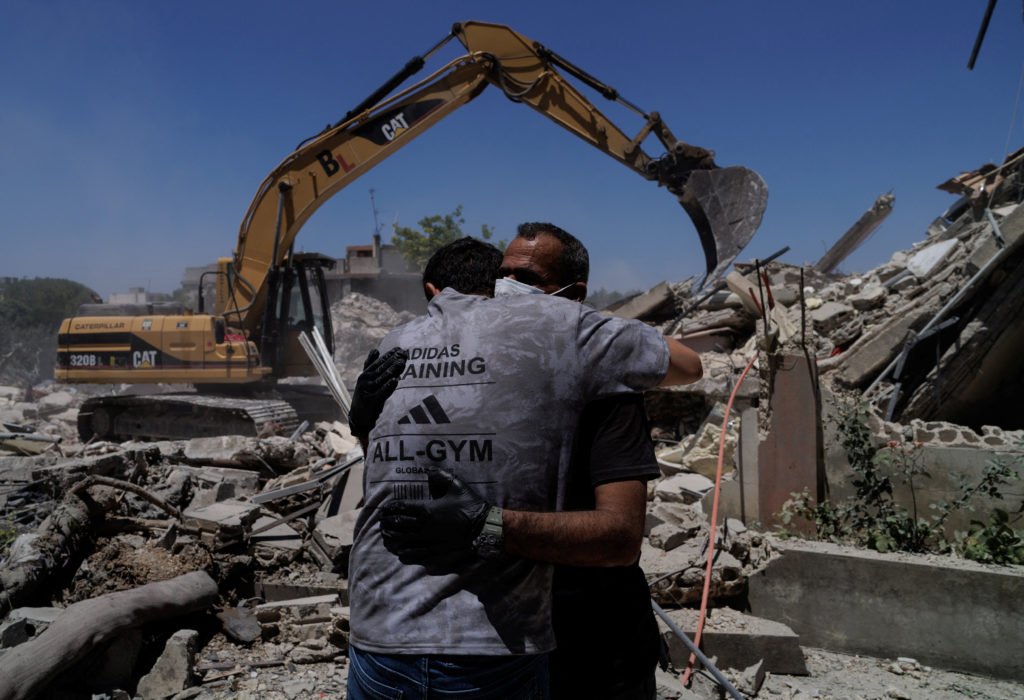
TYRE, Lebanon (AP) — U.S. and Iranian negotiators headed to a Swiss venue Saturday for talks on adding key details to their interim agreement to halt the war, hours after Tehran said it closed the Strait of Hormuz because of Israel’s attacks in Lebanon and warned that little might be achieved if the fighting doesn’t stop.
U.S. President Donald Trump, in response, unleashed a new threat to impose American tolls in the crucial waterway if a final deal with Iran isn’t reached in 60 days, saying the money would be for “services rendered as the Guardian Angel to the countries of the Middle East.” The agreement calls for toll-free travel for 60 days.
WATCH: Israel and Hezbollah agree to a ceasefire as deadly fighting threatens U.S.-Iran deal
The announcements indicated a rough start to the technical-level talks that key mediator Pakistan said will begin Sunday, with Qatari mediators also participating.
U.S. Vice President JD Vance left for Switzerland on Saturday evening, just as Iranian state TV posted video showing Iran’s negotiators arriving there. They are led by parliamentary Speaker Mohammad Bagher Qalibaf and include Foreign Minister Abbas Araghchi and central bank and oil officials, among others. The deal calls for billions of dollars of Iran’s assets to be unfrozen.
Pakistan’s Prime Minister Shehbaz Sharif and army chief Field Marshal Asim Munir also left for Switzerland late Saturday.
Talks were meant to start Friday, but the Iranians canceled plans to attend because of escalating fighting in Lebanon. Negotiators for the U.S. and Qatar, with help from Iran, worked out an agreement between Israel and the Iranian-backed Hezbollah militant group to tamp down hostilities, according to U.S. and regional officials who spoke on the condition of anonymity because they were not authorized to comment publicly.
Vance told reporters he would be in Switzerland “for a day or two” but was optimistic about making progress in talks about Iran’s nuclear program and on a ceasefire in southern Lebanon. He earlier confirmed that top negotiators Jared Kushner and Steve Witkoff were already in Switzerland.
But Iranian Foreign Ministry spokesperson Esmail Baghaei told state TV that negotiations toward a final agreement will begin once key commitments are upheld. If they are not, “the memorandum of understanding as a whole will be jeopardized.”
The strait once again becomes a challenge
The strait has emerged again as a focus. Iran’s joint military command said it was closed because of the U.S. “clear breach of its commitments” by failing to end the war. The interim deal is meant to stop fighting on all fronts, including Lebanon.
The U.S. disputed Iran’s announcement.
“Iran does not control the Strait of Hormuz. Traffic continues to flow, and U.S. forces are monitoring the situation to ensure this remains the case,” said Capt. Tim Hawkins, a spokesperson for U.S. Central Command. The military said that 55 merchant ships transited Saturday with more than 17 million barrels of oil.
The global economy braced for more uncertainty.
READ MORE: Residents return to war-ravaged southern Lebanon with hope and sorrow after the U.S.-Iran deal
Ships began transiting after the interim U.S.-Iran agreement was signed earlier in the week, a milestone that left plenty of questions unanswered. The U.S. lifted its blockade of Iran’s ports and now allows Tehran to sell its oil freely — terms that have left some in U.S. Congress asking whether the war was worth it.
The interim deal signed by Trump and Iranian President Masoud Pezeshkian gives negotiators 60 days to reach a nuclear agreement, but the issue is intricate and the time can be extended.
Israeli attacks in Lebanon kill at least 16
Earlier Saturday, as mediators tried to get the parties to Switzerland, a Hezbollah official told The Associated Press that Iran informed the militant group that Tehran won’t reopen the strait until Israel announces publicly that it will comply with a “comprehensive ceasefire” in Lebanon and an end to military operations there. The official spoke on condition of anonymity because he wasn’t authorized to speak publicly.
The official said that Hezbollah would commit to a ceasefire if Israel does.
An Israeli military official, speaking on condition of anonymity in line with regulations, later said that the military had received “updated directives from the political echelon to cease fire.” The official said that the military is operating in a defensive manner in Lebanon, which includes the right to respond to Hezbollah attacks.
The official also said that five Israeli soldiers had been killed in the past 48 hours in southern Lebanon.
Neither Israel nor Hezbollah are signatories to the deal between the U.S. and Iran.
Israeli strikes on southern Lebanon on Saturday killed at least 16 people, including two children. Seven people were trapped under rubble after strikes hit the southern city of Nabatiyeh and nearby villages, Lebanon’s National News Agency said.
An Israeli military official said that Hezbollah fired more than 50 projectiles at Israeli forces in southern Lebanon overnight. Israel’s army said that it struck dozens of Hezbollah targets and militants.
The death toll in the latest Israel-Hezbollah war has surpassed 4,000, Lebanon’s health ministry later announced.
READ MORE: Israel and Hezbollah renew ceasefire after U.S. and Iran call off talks over fighting in Lebanon
Hezbollah and Israel went to war two days after the U.S. and Israel launched strikes on Iran on Feb. 28, with Hezbollah firing rockets and drones at northern Israel and Israel seizing large swaths of southern Lebanon.
A new round of U.S.-backed talks between the Lebanese government, and Israel is expected in Washington next week.
Israeli Prime Minister Benjamin Netanyahu has vowed to keep Israeli forces in southern Lebanon until any threat to Israel is eliminated. Hezbollah has refused to halt its attacks unless Israel commits to withdrawing from Lebanon.
Fighting continues near the Israel-Lebanon border
The dead in Lebanon included parents and two children in Barish village. In Arab Salim village, a body was pulled from a destroyed house, and in Doueir and Kfar Rumman villages, drone strikes killed a person on a motorcycle and a Lebanese soldier. Nine people were killed in strikes in Qannarit, Sohmor and Shehour villages.
WATCH: Former U.S. envoy outlines challenges in next phase of Iran negotiations
Israeli jets flew low over the coastal city of Tyre.
“Our entire lives would change if there’s a ceasefire,” said one resident, Hussein Khoshman.
Some residents of northern Israel doubted the fighting would stop.
“I don’t believe in a ceasefire because it doesn’t exist,” said Miriam Hod in Metula.
Mroue reported from Beirut, Ahmed from Islamabad and Kim from Washington. Abby Sewell in Beirut, Samy Magdy in Cairo, Konstantin Toropin in Washington, Josef Federman in Jerusalem, and Jamey Keaten in Zurich, Switzerland, contributed to this report.
TravelNews
Talks expected Sunday as Iran closes Strait of Hormuz over Israeli attacks in Lebanon
TYRE, Lebanon (AP) — U.S. and Iranian negotiators headed to a Swiss venue Saturday for talks on adding key details to their interim agreement to halt the war, hours after Tehran said it closed the Strait of Hormuz because of Israel’s attacks in Lebanon and warned that little might be achieved if the fighting doesn’t stop.
U.S. President Donald Trump, in response, unleashed a new threat to impose American tolls in the crucial waterway if a final deal with Iran isn’t reached in 60 days, saying the money would be for “services rendered as the Guardian Angel to the countries of the Middle East.” The agreement calls for toll-free travel for 60 days.
The announcements indicated a rough start to the technical-level talks that key mediator Pakistan said will begin Sunday, with Qatari mediators also participating.
U.S. Vice President JD Vance left for Switzerland on Saturday evening, just as Iranian state TV posted video showing Iran’s negotiators arriving there. They are led by parliamentary Speaker Mohammad Bagher Qalibaf and include Foreign Minister Abbas Araghchi and central bank and oil officials, among others. The deal calls for billions of dollars of Iran’s assets to be unfrozen.
Pakistan’s Prime Minister Shehbaz Sharif and army chief Field Marshal Asim Munir also left for Switzerland late Saturday.
Talks were meant to start Friday, but the Iranians canceled plans to attend because of escalating fighting in Lebanon. Negotiators for the U.S. and Qatar, with help from Iran, worked out an agreement between Israel and the Iranian-backed Hezbollah militant group to tamp down hostilities, according to U.S. and regional officials who spoke on the condition of anonymity because they were not authorized to comment publicly.
Vance told reporters he would be in Switzerland “for a day or two” but was optimistic about making progress in talks about Iran’s nuclear program and on a ceasefire in southern Lebanon. He earlier confirmed that top negotiators Jared Kushner and Steve Witkoff were already in Switzerland.
But Iranian Foreign Ministry spokesperson Esmail Baghaei told state TV that negotiations toward a final agreement will begin once key commitments are upheld. If they are not, “the memorandum of understanding as a whole will be jeopardized.”
The strait once again becomes a challenge
The strait has emerged again as a focus. Iran’s joint military command said it was closed because of the U.S. “clear breach of its commitments” by failing to end the war. The interim deal is meant to stop fighting on all fronts, including Lebanon.
The U.S. disputed Iran’s announcement.
“Iran does not control the Strait of Hormuz. Traffic continues to flow, and U.S. forces are monitoring the situation to ensure this remains the case,” said Capt. Tim Hawkins, a spokesperson for U.S. Central Command. The military said that 55 merchant ships transited Saturday with more than 17 million barrels of oil.
The global economy braced for more uncertainty.
Ships began transiting after the interim U.S.-Iran agreement was signed earlier in the week, a milestone that left plenty of questions unanswered. The U.S. lifted its blockade of Iran’s ports and now allows Tehran to sell its oil freely — terms that have left some in U.S. Congress asking whether the war was worth it.
The interim deal signed by Trump and Iranian President Masoud Pezeshkian gives negotiators 60 days to reach a nuclear agreement, but the issue is intricate and the time can be extended.
Israeli attacks in Lebanon kill at least 16
Earlier Saturday, as mediators tried to get the parties to Switzerland, a Hezbollah official told The Associated Press that Iran informed the militant group that Tehran won’t reopen the strait until Israel announces publicly that it will comply with a “comprehensive ceasefire” in Lebanon and an end to military operations there. The official spoke on condition of anonymity because he wasn’t authorized to speak publicly.
The official said that Hezbollah would commit to a ceasefire if Israel does.
An Israeli military official, speaking on condition of anonymity in line with regulations, later said that the military had received “updated directives from the political echelon to cease fire.” The official said that the military is operating in a defensive manner in Lebanon, which includes the right to respond to Hezbollah attacks.
The official also said that five Israeli soldiers had been killed in the past 48 hours in southern Lebanon.
Neither Israel nor Hezbollah are signatories to the deal between the U.S. and Iran.
Israeli strikes on southern Lebanon on Saturday killed at least 16 people, including two children. Seven people were trapped under rubble after strikes hit the southern city of Nabatiyeh and nearby villages, Lebanon’s National News Agency said.
An Israeli military official said that Hezbollah fired more than 50 projectiles at Israeli forces in southern Lebanon overnight. Israel’s army said that it struck dozens of Hezbollah targets and militants.
The death toll in the latest Israel-Hezbollah war has surpassed 4,000, Lebanon’s health ministry later announced.
Hezbollah and Israel went to war two days after the U.S. and Israel launched strikes on Iran on Feb. 28, with Hezbollah firing rockets and drones at northern Israel and Israel seizing large swaths of southern Lebanon.
A new round of U.S.-backed talks between the Lebanese government, and Israel is expected in Washington next week.
Israeli Prime Minister Benjamin Netanyahu has vowed to keep Israeli forces in southern Lebanon until any threat to Israel is eliminated. Hezbollah has refused to halt its attacks unless Israel commits to withdrawing from Lebanon.
Fighting continues near the Israel-Lebanon border
The dead in Lebanon included parents and two children in Barish village. In Arab Salim village, a body was pulled from a destroyed house, and in Doueir and Kfar Rumman villages, drone strikes killed a person on a motorcycle and a Lebanese soldier. Nine people were killed in strikes in Qannarit, Sohmor and Shehour villages.
Israeli jets flew low over the coastal city of Tyre.
“Our entire lives would change if there’s a ceasefire,” said one resident, Hussein Khoshman.
Some residents of northern Israel doubted the fighting would stop.
“I don’t believe in a ceasefire because it doesn’t exist,” said Miriam Hod in Metula.
___
Mroue reported from Beirut, Ahmed from Islamabad and Kim from Washington. Abby Sewell in Beirut, Samy Magdy in Cairo, Konstantin Toropin in Washington, Josef Federman in Jerusalem, and Jamey Keaten in Zurich, Switzerland, contributed to this report.
___
A previous version of this story corrected the spelling of the Iranian Foreign Ministry spokesperson’s last name to Baghaei, not Bagahei.
TravelNews
Nine people critically injured in fatal Bedford train crash


Nine people in critical condition after train crash
Twenty-eight people remain in hospital – nine of them in a critical condition – after a train crash near Bedford, police have said.
A train driver was killed and 100 people injured when two East Midlands Railway (EMR) services to London St Pancras collided at 17:15 BST on Friday.
Eleven people were very seriously injured, a further 32 were described as injured and 57 had minor injuries, East of England Ambulance Service confirmed.
Speaking near the scene on Saturday, Chief Constable Lucy D’Orsi of British Transport Police (BTP) said the crash was being investigated and asked people to refrain from speculating about what happened.
She said the force’s deepest condolences were with the driver’s family, his friends, and his colleagues.
“The driver’s family, as you would expect, are being supported by specially trained officers at this difficult time,” she added.
BTP declared a major incident following the collision, which took place at about 17:15 BST, just south of Elstow, near the road interchange of the A421 and A6.
EMR services to and from London St Pancras have been suspended throughout the weekend, with trains starting and ending journeys in Bedford.
“There will of course be a lot of questions as to what happened last night,” added D’Orsi.
“I would like to reassure everyone that specialist investigators from BTP are working with colleagues at the Rail Accident Investigation Branch to gather the facts and determine what has happened.
“They are extremely experienced, and I would ask that we all refrain from speculation.”
She praised all who responded to the incident for their “absolutely incredible work in tragic and challenging circumstances” and thanked local people who showed their “immense kindness” to passengers stranded on trains, and to casualties.
Multiple air ambulance helicopters, road vehicles and some 70 firefighters were involved in the immediate aftermath.
Will Rogers, managing director of EMR, said it was on the scene with Network Rail and emergency services to ensure those affected got the care and support they needed.
“This is a profoundly sad day for the rail community,” he added.
RMT general secretary Eddie Dempsey said the union was “devastated” to learn the driver, a former RMT rep, had died.
The two trains involved were the 16:40 EMR train from Corby and the 15:50 Nottingham to London St Pancras service.
Dr Peter Knapp, who was travelling in the front carriage of the train that went into the other, said: “When I got up, I saw all of the chairs everywhere. It felt like I’d been in a bomb explosion.
“When I got up, I saw people’s bloodied faces and people’s legs looked broken and there was smoke everywhere.”
Shola Mene said she heard a “big bang” and “people flew from their seats”.
“There was a lot of blood. A lot of people had facial injuries,” she added.
Teresa Itabor, from Wellingborough in Northamptonshire, said she had been heading to the capital to celebrate her birthday.
“We left Bedford station and there was a massive bang… I didn’t know what was going on. My head hit the seat in front of me,” she said.
“I opened my eyes and that’s when I saw people on the floor with blood everywhere.”
Transport Secretary Heidi Alexander said she was “deeply concerned” by the news of the collision and the death.
“We will make sure that there’s a thorough investigation done to establish how this collision happened and to ensure that lessons are learned so that we don’t have an incident like this ever again,” she said on Friday.
“The UK railways are some of the safest in the world,” she added. “It’s very unusual for this to happen on the network.”
Prime Minister Sir Keir Starmer described the incident as “deeply concerning”, adding: “My thoughts are with the family of the person who has sadly lost their life, and with those who have been seriously injured.”
EMR has advised travellers to use alternative routes over the weekend, saying tickets that had already been bought could be used at no extra cost to travel with other operators.


What happens now UK PM Keir Starmer has resigned? #KeirStarmer #BBCNews
Subscribe to our channel here: https://bbc.in/bbcnews For the latest news download the BBC News app or visit BBC.com/news …


A look back at Keir Starmer's political career. #KeirStarmer #UKPolitics #BBCNews


‘Summer House’ alum Danielle Olivera gives birth 10 weeks early, baby placed in NICU
Danielle Olivera announced that she gave birth to her baby boy, Aidan, 10 weeks early. On Father’s Day Sunday, the...


First round of U.S.-Iran negotiations ends and U.K. PM resigns: Morning Rundown
The U.S. and Iran establish a road map for reaching a final deal during negotiations in Switzerland. Keir Starmer says...


UK PM Keir Starmer resigns. Who will succeed him?
Keir Starmer announced Monday he is stepping down as Britain's prime minister, yielding to intense pressure from his own …


Tobey Maguire’s ex-wife Jennifer Meyer welcomes third baby at 49, her first with fiancé Geoffrey Ogunlesi
Jennifer Meyer is a three-time mom! The jewelry designer, 49, confirmed she gave birth to her third child — her...


‘Hazbin Hotel’ Creator Unveils ‘Prehistoria,’ Warner Bros. New Feature
As Annecy Animation Festival attendees try to avoid the scorching sun as much as they can, Warner Bros. Pictures Animation...
Kelly Ripa’s daughter Lola ‘could cry’ as she shares beautiful life update with her ‘best person ever’
Lola Consuelos is on cloud nine with her boyfriend Cassius Kidston, and recently declared she “could cry” with joy. Kelly...


Concertgoer who fell to his death during Madison Square Garden show identified
NEW YORK — A 51-year-old Connecticut man fell to his death from an upper deck of Madison Square Garden during...


Arizona’s first Buc-ee’s officially opens its doors in Goodyear
GOODYEAR, AZ (AZFamily) — Fans chanted Monday morning as they waited to walk through the doors of Arizona’s first Buc-ee’s....
-

 Business1 week ago
How much of Musk’s wealth comes from government help? Virtually all of it
-
 Politics2 weeks ago
What to know about the stabbing that set off fiery riots in Northern Ireland
-

 Video1 week ago
Download fans say what they love about the festival. #DownloadFestival #BBCNews
-

 Video1 week ago
Why SpaceX IPO isn't about space. #SpaceX #ElonMusk #BBCNews
-

 HealthNews1 week ago
The people of Okinawa, Japan only eat until they are about 80 percent full, then stop — and the practice has been linked in multiple peer-reviewed studies to lower rates of cardiovascular disease, slo
-
 Food1 week ago
Pope Leo’s plane was grounded. Then the King of Spain stepped in to help
-

 TravelNews1 week ago
My Paternal Instinct Should’ve Warned Me About Netflix’s Maternal Instinct
-

 Video1 week ago
Claire Danes has the cutest stories about young Kirsten Dunst on 'Little Women' set